


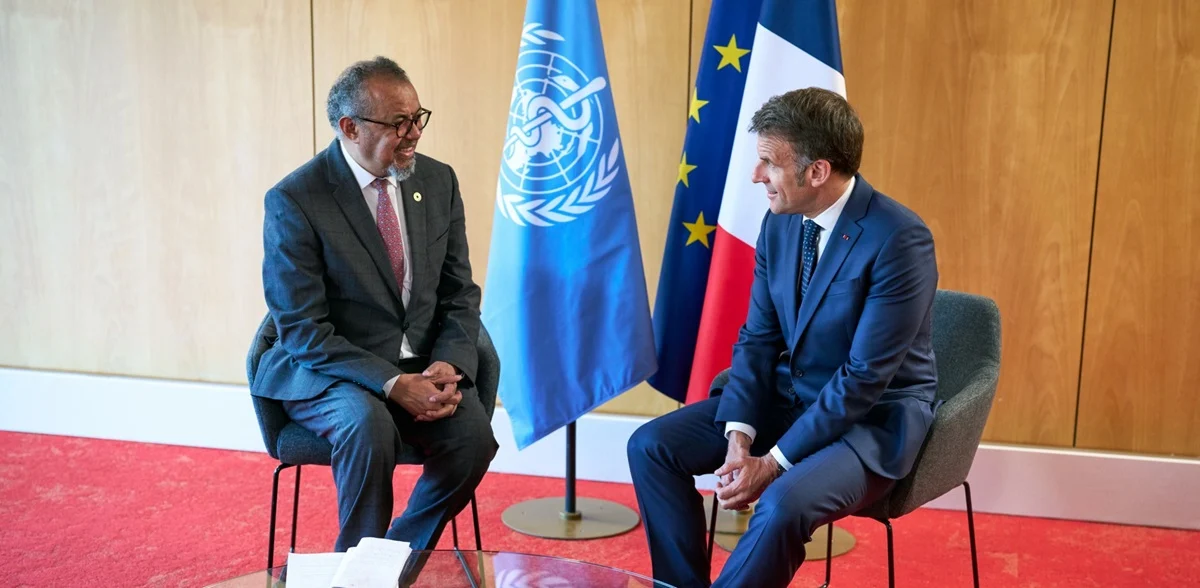
On a pivotal World Health Day, global leaders converged in France for a landmark One Health Summit, culminating in the announcement of an ambitious new wave of concrete actions by the World Health Organization (WHO) and its international partners. This concerted effort is designed to bolster defenses against future health crises by recognizing and acting upon the profound interconnectedness of human, animal, and planetary well-being. Hosted by France, the summit transcended mere discussion, charting a course for practical implementation of the One Health approach, a paradigm shift underscored by this year’s World Health Day theme, "Together for health. Stand with science."
The urgency driving this high-level assembly could not be more apparent. The world grapples with a confluence of escalating threats, including accelerating climate change, pervasive environmental degradation, compromised food and water safety, alarming biodiversity loss, and persistent inequities in healthcare access. These multifaceted challenges create a fertile ground for the emergence and spread of diseases, particularly zoonoses – infectious diseases transmitted from animals to humans. Startling statistics reveal that approximately 60% of all known infectious diseases in humans originate in animals, and a staggering 75% of emerging infectious diseases are zoonotic in nature. The recent COVID-19 pandemic served as a stark, undeniable global lesson, resulting in an estimated 15 million deaths worldwide and inflicting trillions of dollars in economic losses during 2020-2021 alone, profoundly disrupting societies, economies, and healthcare systems. The specter of future pandemics, fueled by increasing human-animal interaction, habitat encroachment, and global travel, underscores the critical need for a paradigm shift in global health strategy.
The Imperative for One Health: A Global Reckoning
The One Health concept, though not new, has gained unprecedented traction in recent years due to the escalating frequency and severity of global health crises. It is a collaborative, multisectoral, and transdisciplinary approach — working at the local, national, and global levels — with the goal of achieving optimal health outcomes by recognizing the intrinsic links between people, animals, plants, and their shared environment. Historically, human, animal, and environmental health sectors often operated in silos, leading to fragmented responses to complex threats. However, the interconnected nature of modern challenges, from antimicrobial resistance to foodborne illnesses and vector-borne diseases exacerbated by climate change, demands a unified strategy. For instance, deforestation and agricultural expansion push wildlife into closer contact with human populations and livestock, increasing the risk of zoonotic spillover events, as seen with diseases like Ebola, SARS, MERS, and Nipah virus. Climate change, by altering ecosystems and expanding the geographical range of disease vectors like mosquitoes and ticks, further complicates this landscape, bringing diseases such as dengue, malaria, and Lyme disease to new regions. The One Health approach offers a framework to address these intricate interdependencies proactively, moving beyond reactive crisis management to preventative action.
France’s Leadership and the Summit’s Vision
As host of this pivotal One Health Summit, France reaffirmed its unwavering leadership and deep commitment to advancing this integrated approach on the global stage. President Emmanuel Macron articulated France’s vision, stating, "One Health is not just about protecting health, it is about recognizing that we live as one system, where the well-being of humans, animals, and the environment is inseparable." He emphasized France’s determination to translate the One Health ambition into concrete implementation, collaborating closely with the WHO and other global partners to prevent the next crisis before it emerges. President Macron underscored the guiding principles: "Science must guide our action, and cooperation must be our strength."
The summit itself was a testament to multilateral collaboration, bringing together an impressive array of Heads of State, ministers, leading scientific experts, and policymakers from diverse sectors. This broad participation highlighted the consensus that coordinated efforts are essential to strengthen international dialogue, mobilize both public and private partners, and work towards the common goal of a healthier planet. The rich discussions and concrete outcomes of the Summit are slated to inform ongoing international deliberations, including those within the G7, on crucial topics such as pandemic preparedness and coordinated responses to health threats at the human, animal, and ecosystem interfaces. This strategic alignment ensures that the One Health agenda will continue to resonate at the highest echelons of global governance.
A New Era of Coordinated Action: WHO’s Four Pillars
To translate the One Health philosophy into tangible impact, WHO, in close collaboration with its global partners, unveiled four major, specific actions designed to strengthen the collective defense against future health crises. These initiatives represent a concerted effort to build resilient systems and foster a proactive, integrated approach to global health security.
1. Forging a Global Network of One Health Institutions
A cornerstone of the new strategy is the planned launch of a Global Network of One Health Institutions. This ambitious initiative aims to significantly enhance and streamline the delivery of the objectives outlined in the One Health Joint Plan of Action. WHO will extend invitations to its Quadripartite partners – the Food and Agriculture Organization (FAO), the World Organisation for Animal Health (WOAH), and the United Nations Environment Programme (UNEP) – to join this crucial network, ensuring a comprehensive and multidisciplinary foundation. The rationale behind this network is to mobilize and connect diverse expertise across health, agriculture, environment, and science sectors. It will provide stronger, more coordinated support to countries by translating global guidance into practical tools and on-the-ground assistance. Furthermore, the network will bolster training and peer learning opportunities, leveraging platforms such as the WHO Academy and other relevant institutions. This structured approach seeks to create a clearer, more country-focused delivery model for effective One Health implementation, moving beyond theoretical frameworks to practical application at the national and local levels.
2. Strengthening the Scientific Foundation: OHHLEP’s Expanded Mandate
Recognizing the indispensable role of science in guiding effective policy, WHO and its Quadripartite partners announced the extension and significant expansion of the One Health High-Level Expert Panel (OHHLEP). This panel stands as the world’s preeminent scientific advisory body dedicated to the One Health approach, providing critical, evidence-based guidance. Its mandate, initially set to conclude, will now run through 2027, with a further new phase already planned for 2027–2029. This extension reinforces OHHLEP’s vital role across three priority areas: actively shaping the global research agenda to address emerging threats, providing robust scientific backing for the implementation of the One Health Joint Plan of Action, and driving high-level advocacy grounded firmly in scientific evidence and data. The continuity and expanded scope of OHHLEP ensure that global One Health strategies remain agile, responsive, and scientifically informed in an ever-evolving landscape of health challenges.
3. Eradicating Rabies: A Model for Zoonotic Disease Control
In a significant demonstration of the One Health approach in action, WHO, in collaboration with the World Organisation for Animal Health (WOAH) and the Institut Pasteur, launched a renewed global initiative aimed at eliminating dog-mediated human rabies deaths by the year 2030. Despite being 100% preventable through vaccination, rabies remains a devastating neglected tropical disease, claiming the lives of nearly 60,000 people each year, a tragic toll disproportionately affecting children in vulnerable communities, primarily in Asia and Africa. This renewed initiative emphasizes enhanced political commitment and strengthening community-based surveillance and research, with endemic countries at the forefront of these efforts. Crucially, the campaign is not merely about rabies eradication; it is strategically designed to serve as a powerful model to strengthen broader One Health surveillance and preparedness systems. The lessons learned and infrastructure built in the fight against rabies can be leveraged to tackle other zoonotic diseases more effectively, illustrating the practical benefits of an integrated approach.
4. Unifying Against Avian Influenza Threats
Addressing another critical zoonotic threat, WHO and its Quadripartite partners presented a new Strategic Framework for Collaboration on avian influenza. Avian influenza, particularly highly pathogenic strains like H5N1 and H7N9, poses a persistent threat to both animal and human health. While primarily affecting poultry, these viruses have caused sporadic but often severe human infections and have the potential to spark pandemics. Recent years have seen unprecedented outbreaks in wild birds and spillover into various mammal populations globally, raising significant concerns. The new framework aims to strengthen coordination across key areas: surveillance, risk assessment, preparedness, and response. Its core objective is to help countries transition from fragmented, sector-specific actions to a unified One Health strategy, comprehensively addressing the wider impacts of avian influenza on public health, food security, livelihoods, and biodiversity. This coordinated approach is vital to mitigate the economic devastation of poultry culls and the public health risk of a potential human pandemic.
WHO Assumes Leadership of the Quadripartite Collaboration
In a significant development reflecting its enhanced commitment and strategic leadership, WHO is assuming the Chairmanship of the Quadripartite collaboration. This pivotal role places WHO at the helm of coordinated global action alongside its vital partners: the Food and Agriculture Organization (FAO), the World Organisation for Animal Health (WOAH), and the United Nations Environment Programme (UNEP). Under WHO’s leadership, the Quadripartite partnership will prioritize delivering measurable impact at the country level, ensuring that global strategies translate into tangible improvements where they are most needed. Furthermore, the collaboration will focus on streamlining governance and aligning efforts around a focused set of high-impact priorities. This leadership shift is expected to further strengthen advocacy, norm-setting, and evidence generation within the One Health framework, providing clearer direction and more effective coordination for global health security efforts.
The Global Forum of WHO Collaborating Centres: A Parallel Nexus of Expertise
Running concurrently with the One Health Summit, from April 7-9, was WHO’s first Global Forum of WHO Collaborating Centres (CCs). This significant event convened a distinguished group of high-level representatives, including the Minister of Health of France, alongside ministers from Germany, Indonesia, and South Africa. Critically, it also brought together more than 800 WHO Collaborating Centres from over 80 countries. WHO Collaborating Centres are institutions such as research institutes, universities, and laboratories designated by the WHO to carry out activities in support of its programmes. They serve as an extension of WHO’s technical capacity and expertise. The Global Forum was conceived as a forward-looking platform specifically designed to deepen collaboration among these leading academic and research institutions worldwide. Its overarching aim is to accelerate scientific innovation, facilitate crucial data sharing, foster coordinated research initiatives, and enhance capacity-building efforts across the globe. This parallel forum underscored the scientific backbone necessary for the successful implementation of the One Health approach, emphasizing that robust research and shared knowledge are fundamental to tackling complex health challenges.
Statements of Commitment and a Vision for the Future
The collective message emanating from both the One Health Summit and the Global Forum of WHO Collaborating Centres was unequivocal: addressing the intricate and interconnected health challenges of the 21st century demands nothing less than stronger multilateral cooperation, greater and sustained investment in science, and unwavering, sustained efforts to translate the One Health approach from a theoretical concept into concrete, actionable strategies at both global and local levels. Dr. Tedros Adhanom Ghebreyesus, Director-General of WHO, encapsulated this sentiment, reiterating that "The health of people, animals and the environment we share are inextricably interwoven, and we cannot protect one without protecting all three." He emphasized that the One Health approach serves as a critical mechanism to "bring together expertise to work across silos and sectors to prevent and respond to threats more effectively."
The outcomes of this landmark summit mark a critical turning point, signifying a global commitment to a more holistic and integrated approach to health security. While the path forward will undoubtedly present challenges, including securing sustained funding, fostering political will across diverse national contexts, and truly integrating cross-sectoral efforts, the robust framework and renewed leadership demonstrated in France offer a hopeful and strategic blueprint. By strengthening scientific collaboration, empowering national implementation, and focusing on preventable zoonotic diseases, the global community has taken a decisive step towards building a healthier, more resilient future for all inhabitants of our shared planet.