


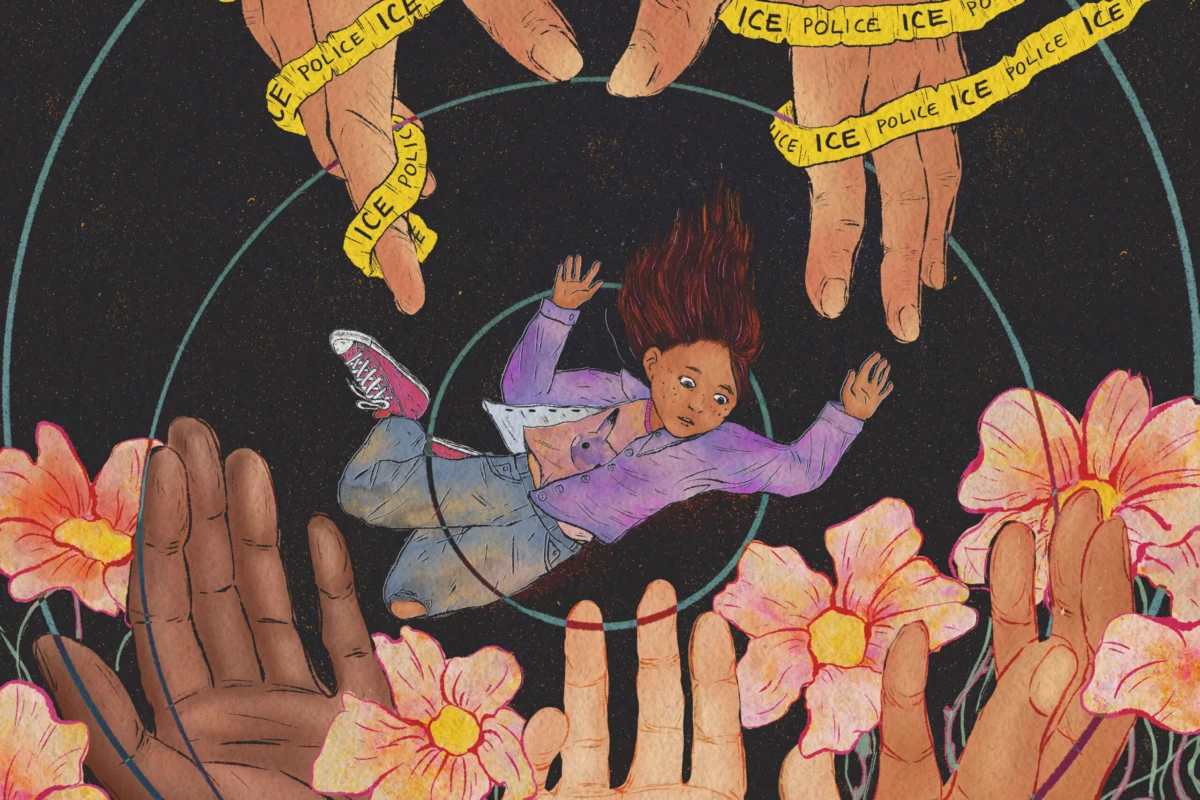
As the United States grapples with what President Donald Trump has vowed will be the most extensive mass deportation operation in the nation’s history, a growing number of states are proactively legislating to prevent children of detained parents, particularly those without immediate family or friends to care for them, from being funneled into the already overburdened temporary foster care system. This critical issue highlights a profound intersection of federal immigration enforcement and state-level child welfare responsibilities, a confluence that often leaves vulnerable children in precarious situations. Despite the increasing frequency of these separations, the federal government does not maintain comprehensive records on how many children enter the foster care system as a direct consequence of immigration enforcement actions, making it challenging to ascertain the full scope and impact of this phenomenon.
Background: A Resurgence of Enforcement and Family Vulnerabilities
The current surge in state-level legislative responses is set against a backdrop of intensified immigration enforcement under the Trump administration. Throughout his first term (2017-2020), President Trump implemented a series of aggressive immigration policies, including the controversial "zero tolerance" policy at the border, which led to widespread family separations and drew international condemnation. While that specific policy was later rescinded, the underlying philosophy of robust enforcement and increased deportations has persisted and is now being amplified. The promise of the "largest mass deportation operation" signals a renewed and potentially even more expansive campaign, placing countless immigrant families, including those with U.S. citizen children, at heightened risk of separation.
The demographics of the affected population underscore the gravity of the situation. Research from the Brookings Institution, a Washington, D.C.-based think tank, estimates that approximately 5.6 million U.S. citizen children live with at least one parent or other family member who lacks legal immigration status. Within this vulnerable group, a significant subset of 2.6 million children has both parents without legal status. These figures illustrate the vast potential for disruption and trauma within communities across the country as federal immigration agents conduct raids, arrests, and detentions. The mere threat of such actions creates an environment of pervasive fear and uncertainty, prompting many families to live in constant apprehension.
A Disturbing Chronology of Increasing Detentions and Separations
Evidence from various reports and state agencies points to a disturbing trend of escalating detentions and, consequently, a rise in child separations. By mid-February 2025, nearly 70,000 individuals were reported to be in the custody of U.S. Immigration and Customs Enforcement (ICE). This figure follows a record high of 73,000 detainees in January 2025, representing an alarming 84% increase compared to the previous year. Such rapid expansion of the detainee population suggests a significant intensification of enforcement activities across the nation.
The human toll of these statistics is starkly illustrated by local reports. In Oregon, for instance, Jake Sunderland, a spokesperson for the state’s Department of Human Services, confirmed that by February 2025, two children had been placed in temporary foster homes after being separated from their parents due to immigration detention cases. Sunderland underscored the unprecedented nature of these events, stating, "Before fall 2025, this had never occurred." This suggests a recent and sharp departure from past trends, indicating that the current wave of enforcement is having direct and immediate consequences on child welfare systems.
Broader investigations corroborate this emerging pattern. A ProPublica investigation revealed that by August 2025, parents of 11,000 U.S. citizen children had been detained since the beginning of the Trump administration’s tenure. This figure highlights the systemic nature of family separation, affecting not only children at the border but also those living within communities nationwide. More recently, NOTUS reported in February 2025 that at least 32 children whose parents were either detained or deported had been placed in foster care across seven different states. While these numbers may appear modest on the surface, advocates argue they likely represent a severe undercount. Sandy Santana, the Executive Director of Children’s Rights, a legal advocacy organization, expressed strong skepticism regarding the reported figures. "That number seems very low to us," Santana stated, suggesting that the actual number of children entering foster care due to immigration enforcement is substantially higher due to the lack of centralized data collection and potential reporting gaps.
The Profound and Lasting Trauma of Separation on Children
The separation of children from their parents, particularly under traumatic circumstances such as detention or deportation, has profound and often devastating long-term consequences for their health and psychological well-being. Numerous scientific studies and reports consistently demonstrate that such experiences can lead to a host of severe problems, including but not limited to post-traumatic stress disorder (PTSD), anxiety, depression, and other mental health challenges. The immediate emotional distress is often just the beginning of a complex and difficult journey for these children.
Experts emphasize the concept of "toxic stress" in this context. Prolonged and intense stress, such as that experienced during parental separation and uncertainty about the future, can have detrimental effects on a child’s developing brain and body. According to KFF (formerly the Kaiser Family Foundation), a non-profit organization dedicated to health policy information, toxic stress is associated with damage to brain areas responsible for learning and memory. This can manifest as difficulties in school, impaired cognitive function, and behavioral issues. Furthermore, intense stress can weaken a child’s immune system, leading to more frequent infections and other physical health problems. The American Academy of Pediatrics, among other leading medical organizations, has issued policy statements underscoring the severe health implications of family separation, describing it as a form of adverse childhood experience (ACE) with potentially lifelong repercussions. The disruption of stable attachments and the loss of primary caregivers can undermine a child’s sense of security and trust, impacting their ability to form healthy relationships in the future.
State-Level Legislative Responses: A Patchwork of Protections
In the absence of a comprehensive federal framework to protect children whose parents are subject to immigration enforcement, individual states have taken it upon themselves to develop legislative solutions. This has led to a patchwork of laws and policies across the country, reflecting varying degrees of commitment and capacity to address the issue.
The first wave of these state-level responses emerged during President Trump’s initial term. States like Maryland, New York, Washington, D.C., and Virginia modified existing laws or introduced new provisions to allow for temporary guardianship arrangements in cases involving immigration-related separations. For example, Virginia’s amendments aimed to provide legal avenues for caregivers to obtain parental rights when parents faced deportation. These initial efforts laid some groundwork but often proved insufficient to fully address the complexities of immigration detention and deportation.
The current escalation in enforcement actions has spurred a second, more robust wave of legislative activity. Legislators in New Jersey are currently considering a bill that would amend a state law allowing parents to designate temporary guardians in cases of death or incapacitation. The proposed modification would explicitly add separation due to federal immigration enforcement as another valid reason for such designations. This reflects a growing recognition that immigration detention is a distinct and pressing circumstance requiring specific legal provisions.
California and Nevada have already enacted significant protective measures in the past year. California’s Family Preparedness Plan Act (AB495) stands out as a pioneering piece of legislation. This act allows parents to proactively designate guardians and share custody rights, critically ensuring that their parental rights are not automatically suspended while they are detained. The law also includes provisions for full restoration of parental rights once parents are released and able to reunite with their children. This approach prioritizes family unity and minimizes the legal hurdles for reunification. Juan Guzman, director of the juvenile court and guardianship practice at Alliance for Children’s Rights, a legal advocacy organization in Los Angeles, emphasized the importance of such proactive planning. He explained that before California’s law changed, the only reason a parent could share custody rights with another guardian was if they had a terminal illness. Now, if parents prepare a plan in advance and designate a trusted person to care for their children, the state child welfare agency can facilitate the transfer of children to that person without having to open a formal foster care case. This avoids the often-arduous and complex process of navigating the foster care system, which can be nearly impossible for detained or deported parents.
Nevada also expanded its existing guardianship law last year to include immigration enforcement. However, this measure requires parents to file notarized documentation with the secretary of state’s office, an administrative step that can be costly and intimidating for many immigrant families. Cristian González-Pérez, an attorney with Make the Road Nevada, a non-profit organization providing resources to immigrant communities, noted that some immigrants hesitate to complete government forms due to fears that ICE could access the information and target them. While González-Pérez assures community members that state forms are confidential and only accessible by hospitals and courts, the pervasive fear of government surveillance remains a significant barrier.
Obstacles to Reunification and the Shadow of Federal Surveillance
Once a child enters state custody, particularly the foster care system, significant legal and logistical obstacles often impede family reunification. Juan Guzman points out that if a child is placed in temporary care and neither parent can participate in required court proceedings due to detention or deportation, the likelihood of successful reunification dramatically decreases. The labyrinthine nature of child welfare courts, coupled with the communication barriers and logistical challenges inherent in detention or cross-border deportation, can make it nearly impossible for parents to fulfill the requirements necessary to regain custody.
Adding to these difficulties is the broader climate of distrust surrounding government agencies. While ICE directives state that the agency "strives" to facilitate the participation of detained parents in family, child welfare, or guardianship court proceedings, Sandy Santana of Children’s Rights noted that it remains unclear whether ICE consistently adheres to these standards. Efforts to obtain comments from ICE officials for this article were unsuccessful, leaving questions about their compliance unanswered.
The concerns expressed by immigrant communities about government data access are not unfounded. The Trump administration has taken unprecedented steps to access sensitive information from various federal entities, including the Centers for Medicare and Medicaid Services, the Internal Revenue Service (IRS), the Supplemental Nutrition Assistance Program (SNAP), the Department of Housing and Urban Development (HUD), and others. This history of data sharing across agencies, even if not directly involving state guardianship forms, fuels the apprehension among immigrant families that any information provided to a government entity could potentially be used against them.
Empowering Families Through Knowledge and Preparedness
Both Cristian González-Pérez and Juan Guzman stress that many immigrant parents are simply unaware of their rights and the legal avenues available to them to protect their children. Educating these communities about the importance of designating temporary guardians and creating family preparedness plans is a crucial step in empowering them to navigate these challenging circumstances.
For parents, the act of creating a family plan can be a powerful antidote to feelings of helplessness. It provides a sense of control in an otherwise unpredictable environment. However, both attorneys acknowledge the profound emotional difficulty inherent in these conversations. "People don’t want to talk about that issue," Guzman reflected. "For a parent to have to talk to a child about the possibility of separation is scary. It’s not something anyone wants to do." Despite the emotional toll, preparing such a plan is paramount. It allows parents to proactively identify trusted individuals—family members, friends, or community members—who can step in to care for their children, preventing them from entering the formal foster care system. This foresight can make the difference between a child experiencing temporary care with a familiar face and being placed with strangers in a state-run system, thereby mitigating some of the traumatic impacts of separation.
Implications and the Path Forward
The current situation highlights a critical tension between federal immigration enforcement priorities and the fundamental rights and well-being of children residing within U.S. borders. The increasing number of children at risk of entering foster care due to parental detention or deportation represents not only a humanitarian crisis but also a significant burden on state child welfare systems. The long-term societal costs of childhood trauma, including increased healthcare needs, educational challenges, and potential involvement with the justice system, are substantial.
The disparate state-level responses, while commendable in their intent, underscore the urgent need for a more consistent and compassionate federal approach. Comprehensive immigration reform that includes protections for families and children, clear guidelines for managing parental detention, and robust support for family reunification efforts could alleviate much of the current distress. Until such federal action materializes, states will continue to serve as the primary front line, developing innovative but often fragmented solutions to shield their most vulnerable residents. Advocacy groups like Children’s Rights and Alliance for Children’s Rights will remain crucial in both pushing for systemic change and providing direct legal assistance to families caught in the crosshairs of immigration enforcement. The ongoing struggle to protect children from the collateral damage of immigration policies demands continued vigilance, empathy, and legislative action at all levels of government.