



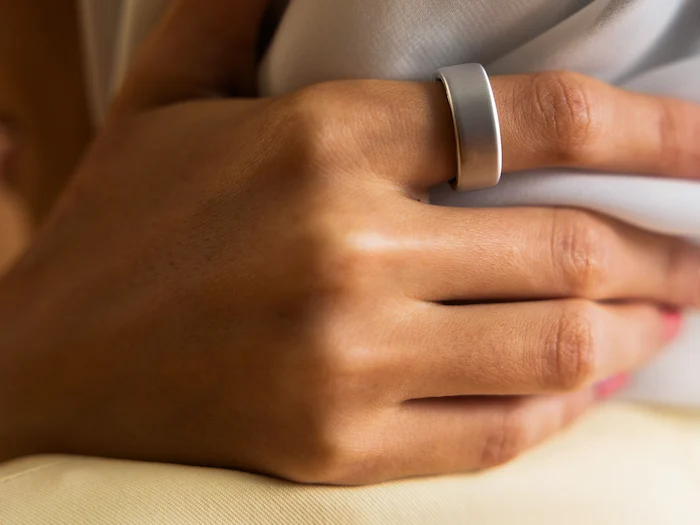
The integration of consumer-grade wearable technology into clinical-grade health monitoring has reached a significant milestone as researchers at the Centre for Sleep and Cognition at the NUS Yong Loo Lin School of Medicine have successfully demonstrated that pulse signals recorded overnight by the Oura Ring can accurately estimate vascular age. This development, recently detailed in the journal PLOS Digital Health, represents a shift in how cardiovascular health can be managed, moving the capability for sophisticated arterial analysis from the confines of specialized clinics directly into the hands of the general public. By utilizing photoplethysmography (PPG) sensors—the same light-based technology used to measure heart rate—the research team has unlocked a method to monitor the physiological "wear and tear" of the human circulatory system during sleep, providing a key indicator of cardiovascular disease risk without the need for invasive or expensive medical procedures.
Understanding the Significance of Vascular Age
Vascular age, often referred to as cardiovascular age in digital health applications, is a physiological metric that measures the health and elasticity of a person’s arteries relative to their chronological age. While a person may be 45 years old according to their birth certificate, lifestyle factors, genetics, and underlying health conditions may result in arteries that function like those of a 60-year-old. Conversely, an individual with a rigorous cardiovascular regimen and optimal nutrition may possess the vascular elasticity of someone much younger. This discrepancy is a critical predictor of health outcomes; when vascular age significantly exceeds chronological age, the risk of developing cardiovascular diseases (CVD), such as stroke, myocardial infarction, and systemic hypertension, increases exponentially.
Arterial stiffness is the primary driver behind an advanced vascular age. As humans age, the elastin fibers in the arterial walls begin to fray and are often replaced by stiffer collagen. This process is accelerated by high blood pressure, inflammation, and oxidative stress. Traditional methods of measuring this stiffness, such as pulse wave velocity (PWV) assessments, have long been the gold standard in clinical settings. However, these tests require specialized equipment, such as the SphygmoCor system, and trained technicians to operate them, making routine monitoring impractical for the average person.
The Shift from Clinical Labs to Passive Monitoring
The study conducted by the National University of Singapore (NUS) sought to determine if the passive, longitudinal data collection afforded by a smart ring could replicate the accuracy of clinical sensors. The researchers focused on photoplethysmography (PPG) signals, which are generated by the Oura Ring’s infrared LEDs. These sensors detect changes in blood volume in the finger’s digital arteries with every heartbeat. While PPG is a standard feature in most fitness trackers for measuring heart rate and oxygen saturation, the NUS team aimed to extract much deeper "morphological" data from the pulse waveform itself.
A pulse waveform is not merely a rhythmic beat; it contains complex information regarding the reflection of blood waves within the arterial tree. The shape of these waves changes as arteries stiffen. By analyzing these subtle variations in the waveform recorded while the user is in a state of rest—specifically during sleep—the researchers were able to apply advanced computational models to derive an estimate of vascular age.
Methodology and the Role of Deep Learning
To validate their findings, the research team employed a dual-track analytical approach. They compared traditional feature-based methods, which look for specific landmarks in a pulse wave, against a sophisticated deep learning model. Deep learning, a subset of artificial intelligence, is particularly adept at identifying patterns in complex biological data that may be invisible to the human eye or traditional statistical models.
One of the most significant challenges the team faced was the hardware difference between a clinical fingertip sensor and a wearable ring. Clinical sensors are designed for high-fidelity, short-term readings in a controlled environment, whereas a smart ring must contend with the movement of the wearer and the smaller surface area of the finger. Despite these hurdles, the results were remarkably consistent. The deep learning model predicted vascular age with a mean error of only six to seven years when compared to clinical standards. This level of accuracy is considered highly significant in a field where even a rough estimation can serve as a life-saving early warning signal.
Furthermore, the study was unique because the NUS team developed its own independent analytical pipeline. Rather than relying on the proprietary algorithms built into the Oura Ring’s software, the researchers used raw data to build their own models. This transparency is crucial for the scientific community, as it allows for the reproducibility of results and ensures that the findings are based on physiological realities rather than "black box" commercial software.
Chronology of Wearable Evolution and Cardiovascular Monitoring
The journey toward this breakthrough has been decades in the making. The evolution of cardiovascular monitoring can be traced through several key technological phases:
- The Early Era (1980s–2000s): Heart rate monitoring was primarily the domain of chest straps used by elite athletes. These devices used electrocardiography (ECG) to detect the electrical signals of the heart.
- The Rise of PPG (2010s): The introduction of light-based PPG sensors in wrist-worn devices like the Fitbit and early Apple Watch democratized heart rate tracking. However, these early sensors were prone to "noise" from movement and were mostly used for basic fitness tracking.
- The Sleep Focus (2015–2020): Companies like Oura pioneered the shift toward nighttime monitoring. By recording data during sleep, wearables could capture a "cleaner" signal, free from the interference of daily activities, allowing for the measurement of Heart Rate Variability (HRV) and respiratory rates.
- The Clinical Validation Era (2021–Present): The current phase involves rigorous academic and clinical validation of wearable data. Studies like the one from NUS are proving that these devices can go beyond "wellness" and provide "medical-grade" insights into chronic conditions.
Supporting Data and Correlation with Blood Pressure
A vital component of the NUS study was the correlation found between ring-derived vascular age and blood pressure. Hypertension is often called a "silent killer" because it rarely presents symptoms until significant damage has occurred. The researchers found that individuals with higher estimated vascular ages also tended to have higher systolic and diastolic blood pressure readings.
This correlation suggests that a wearable device could potentially act as a continuous, non-invasive monitor for hypertension risk. While a smart ring cannot yet replace a blood pressure cuff, it can provide a longitudinal view of health trends. For instance, if a user’s vascular age shows a steady upward trend over six months, it could prompt them to seek a formal clinical evaluation long before a cardiovascular event occurs.
Official Responses and Expert Insights
The research has drawn praise from both the academic and medical communities. Gizem Yilmaz, a research fellow and co-first author of the study, emphasized the scalability of the findings. “Signals collected passively during sleep can be translated into clinically meaningful insights about vascular health,” Yilmaz stated. “This opens the door to scalable, longitudinal monitoring of cardiovascular health using devices people already wear in their daily lives.”
Professor Michael Chee, the study’s principal investigator and a renowned expert in sleep and cognition, highlighted the potential for a paradigm shift in preventative medicine. “Our findings lend credence to moving cardiovascular monitoring out of the clinic and into everyday life,” Chee noted. He further explained that wearable-derived data could reinforce positive lifestyle habits. When a user sees their vascular age improve after adopting a better diet or exercise routine, it provides a powerful psychological incentive to maintain those healthy behaviors.
Prof. Chee, who also serves as an Oura medical advisor, pointed out that the Oura Ring’s specific design—collecting data from the finger where the signal is stronger than at the wrist—makes it an ideal candidate for this type of high-fidelity vascular analysis.
Broader Implications for Public Health and Preventive Care
The implications of this research extend far beyond individual health tracking. On a population level, the ability to monitor vascular health at scale could revolutionize public health initiatives. Large-scale studies could use wearable data to identify "hotspots" of cardiovascular risk in specific demographics or geographic areas, allowing for targeted interventions.
In the realm of insurance and corporate wellness, the ability to accurately gauge biological age could lead to more personalized health plans. However, this also raises important ethical questions regarding data privacy and the potential for "biological ageism." The researchers at NUS have mitigated some of these concerns by emphasizing the need for transparent, peer-reviewed algorithms rather than relying solely on corporate data silos.
Furthermore, the democratization of this data could reduce the burden on global healthcare systems. Cardiovascular diseases are the leading cause of death globally, taking an estimated 17.9 million lives each year. By enabling earlier detection and fostering a culture of prevention, wearable technology could help reduce the number of emergency hospitalizations and chronic care requirements associated with advanced heart disease.
Future Directions in Research
While the NUS study is a landmark achievement, the researchers acknowledge that more work remains. Future phases of the research will focus on expanding the study to include more diverse populations, including individuals with pre-existing conditions like diabetes or advanced heart failure. Testing the algorithm across different ethnicities and age groups is essential to ensure that the deep learning models are not biased toward a specific demographic.
Additionally, the team is interested in exploring how vascular age estimates change in response to specific clinical interventions, such as the administration of statins or blood pressure medication. If a wearable can accurately track the "rejuvenation" of arteries following medical treatment, it could become a vital tool for doctors to monitor patient adherence and treatment efficacy in real-time.
As wearable technology continues to advance, the line between consumer gadgets and medical devices will continue to blur. The NUS study serves as a definitive proof of concept that the future of heart health is not just in the clinic, but on our fingers, working silently while we sleep to provide a clearer picture of our biological longevity.