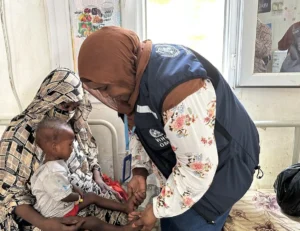



For months, a palpable cloud of fear has enveloped immigrant communities across San Bernardino, California, profoundly complicating the essential work of community health professionals like María González. In this diverse city, where nearly a quarter of residents are foreign-born, the apprehension stemming from shifting federal immigration policies has created significant barriers to accessing crucial health services. The fear is not merely anecdotal; it is translating into a measurable decline in enrollment for programs designed to provide a safety net for vulnerable populations.
A Growing Climate of Fear and Policy Shifts
The anxiety began to intensify over the summer months, fueled by a series of events that signaled a more aggressive stance on immigration enforcement and eligibility for public benefits. News of targeted immigration raids sweeping across Southern California sent ripples of unease through neighborhoods. Concurrently, reports emerged detailing plans by the Trump administration to share Medicaid data with Immigration and Customs Enforcement (ICE), raising alarms about potential surveillance and punitive actions. These federal initiatives were compounded by the passage of new state and federal restrictions on immigrant Medicaid eligibility, further narrowing access for some populations.
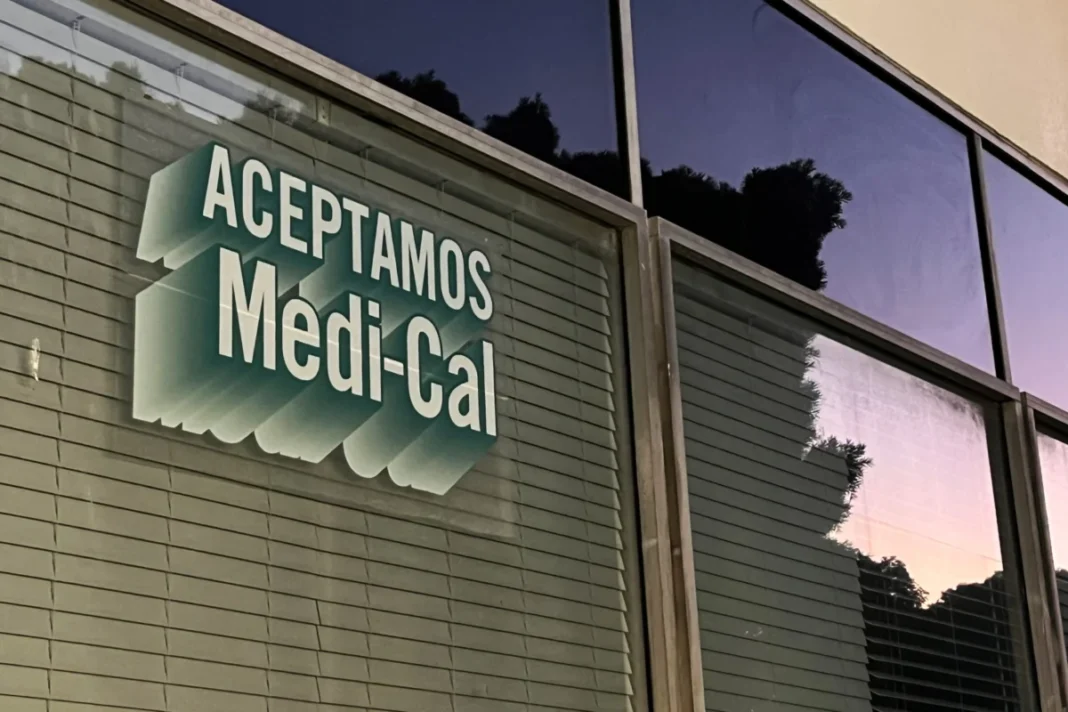
The situation escalated dramatically in November with the federal government’s release of a new "public charge" proposal. This proposed rule, if enacted, would significantly broaden the criteria under which an individual could be deemed a "public charge," potentially blocking certain immigrants from obtaining permanent legal residency (green cards) if they or their family members have utilized a range of public benefits, including Medicaid. While many of González’s clients and their children—often U.S. citizens—remain fully eligible for California’s comprehensive Medicaid program, known as Medi-Cal, which covers over 14 million low-income residents or those with disabilities, they are increasingly reluctant to enroll or renew their coverage.
"Many people don’t want to apply," González stated, her voice reflecting the deep concern she observes daily. "There are people who say they don’t even want to go outside and water their plants. The fear is that pervasive." This sentiment highlights a profound erosion of trust and a chilling effect that extends far beyond direct eligibility criteria.
Quantifying the Disenrollment: A Stark Reversal
The impact of this fear is starkly evident in recent enrollment data. An analysis conducted by KFF Health News revealed a significant drop in Medi-Cal enrollment among immigrants without legal status. From June to December, the latest period for which comprehensive figures are available, almost 100,000 immigrants without legal status disenrolled from Medi-Cal. This figure represents approximately a quarter of all disenrollments during that timeframe, despite this group constituting only about 11% of the total Medi-Cal enrollee population.
This sharp decline marks a critical reversal in a previously steady upward trend of enrollment among immigrants without legal status in California. Prior to July, sign-ups within this demographic had consistently risen each month since January 2024, when the state expanded Medi-Cal eligibility to include all low-income residents, irrespective of their immigration status. The timing of this reversal, closely following the intensified policy discussions and enforcement news, suggests a direct correlation between policy fear and benefit avoidance.
Tessa Outhyse, a spokesperson for the California Department of Health Care Services (DHCS), which administers Medi-Cal, offered an official explanation for the overall enrollment declines. She attributed the changes primarily to the state’s resumption of eligibility checks, which had been suspended during the COVID-19 pandemic. Indeed, overall Medi-Cal enrollment reached its peak in May 2023 and has since decreased by approximately 1.6 million individuals. However, researchers specializing in health policy suggest this explanation does not fully account for the specific and disproportionate drop observed among immigrant populations.
Leonardo Cuello, from Georgetown University’s Center for Children and Families, and Susan Babey, from the UCLA Center for Health Policy Research, pointed out that California and most other states had largely completed the resumption of eligibility checks by mid-2024. This timeline predates the most precipitous declines observed in the latter half of the year, particularly among immigrant groups. Cuello further elaborated that more recent federal actions, including the passage of the "One Big Beautiful Bill Act" and supplementary executive orders, have introduced additional changes that are significantly contributing to the current wave of disenrollment. While the specific provisions of the "One Big Beautiful Bill Act" are broad, its inclusion of measures impacting immigrant access to benefits has amplified anxieties.
The "Public Charge" Rule: A History of Fear and Confusion
The concept of "public charge" is not new but has undergone significant reinterpretation and weaponization in recent years. Historically, the "public charge" rule was narrowly applied, primarily targeting individuals who were solely reliant on cash assistance programs or long-term, government-funded institutionalized care. This meant that most non-cash benefits, such as Medicaid, SNAP (food stamps), or housing assistance, were generally not considered when determining an immigrant’s likelihood of becoming dependent on the government.
During the first Trump administration, however, the criteria for "public charge" were dramatically broadened. The 2019 rule allowed immigration officials to consider the use of a wider array of public benefits, including Medicaid, food assistance, and housing aid, when evaluating an individual’s application for a green card or visa. This expansion created widespread confusion and fear, leading many eligible individuals, including U.S. citizen children within immigrant families, to forgo vital programs they were entitled to. Even after several courts blocked the implementation of this rule and the subsequent Biden administration rescinded it, the chilling effects persisted, with many individuals continuing to avoid programs due to lingering uncertainty and distrust.
Louise McCarthy, president and CEO of the Community Clinic Association of Los Angeles County, which represents about 70 health centers, emphasized the lasting impact. "It caused a high level of confusion," she said. "Community health center staff are still working to undo the effects of the first rule." The proposed November 2025 rule threatens to revive and potentially deepen this fear by again expanding the definition of public charge to include non-cash programs and granting immigration officers greater discretion in applying the label.
Projected Savings and Profound Human Costs
The Department of Homeland Security (DHS) has justified its proposed "public charge" rule by stating that the changes are necessary to "align with long-standing policy that aliens in the United States should be self-reliant and government benefits should not incentivize immigration." The agency projects that the proposed changes could result in nearly $9 billion in annual savings for federal and state governments, primarily from individuals disenrolling from or choosing not to enroll in public benefit programs. The public comment period for this proposal concluded in December, and DHS has yet to announce a final decision on its implementation.
However, analyses by organizations like KFF highlight the profound human cost behind these projected savings. A KFF analysis of the proposed rule estimated that it could lead to 1.3 million to 4 million people disenrolling from Medicaid or the Children’s Health Insurance Program (CHIP). Alarmingly, this includes an estimated 600,000 to 1.8 million U.S. citizen children, who would lose access to crucial health coverage despite their clear legal eligibility.
Benyamin Chao, supervising health and public benefits policy manager at the California Immigrant Policy Center, minced no words in his assessment. "It’s clearly being weaponized to create fear and anxiety," Chao stated, calling the proposal part of an "assault on lawfully present immigrants and U.S. citizens who are family members, and just the general community."
Broader National Trends and Ripple Effects
The disenrollment trend observed in California is not isolated. A KFF/New York Times survey found that immigrant adults nationally, particularly parents, are increasingly avoiding government programs for food, housing, or health care. This avoidance stems from a desire to prevent any scrutiny of their or a family member’s immigration status, affecting even lawfully present residents and naturalized citizens. This parental avoidance is particularly alarming given that approximately one in four children in the U.S. has at least one immigrant parent, with the vast majority of these children being U.S. citizens themselves.
Cuello suspects this widespread fear contributes to a nationwide enrollment drop of almost 3% in Medicaid and CHIP during the first ten months of the previous year. Data compiled by his colleagues at Georgetown University further indicates a 5.6% drop in enrollment among California children during this period, signaling a broader crisis in child health coverage.
The ripple effects extend beyond health care. Public charge fears are also anticipated to significantly decrease enrollment in anti-hunger programs, such as the Supplemental Nutrition Assistance Program (SNAP), known in California as CalFresh. Mark Lowry, who leads the Orange County Food Bank, warned that this, combined with disenrollment related to the "One Big Beautiful Bill Act," could overwhelm local food pantries. Federal nutrition programs account for the vast majority of food aid distributed in the country, and emergency food systems simply lack the capacity or resources to absorb such a massive influx of need. "There’s no way that the emergency food system has the capacity or resources to address those needs," Lowry asserted, painting a grim picture of potential food insecurity.
Balancing Immediate Needs Against Future Fears
Despite the pervasive fear, the impact is not uniformly experienced across all immigrant communities. Juana Zaragoza, who manages a program in Oxnard that assists primarily Indigenous Mexican farmworkers in signing up for Medi-Cal, notes that overall enrollment and reenrollment have remained steady in her area over the past few months. She attributes this difference, in part, to a lower awareness of the "public charge" proposal among the community members she serves.
More significantly, Zaragoza highlights that for many, immediate and pressing health care needs often outweigh future immigration concerns. "We encounter a lot of people who are balancing: what benefits me now and what benefits me later," she explained. "Some just want to cover their needs in the moment." This pragmatic approach underscores the desperate circumstances faced by many and the difficult choices they are forced to make between their immediate well-being and their long-term immigration aspirations.
The ongoing debate and proposed changes to the "public charge" rule, alongside other stringent immigration policies, continue to cast a long shadow over immigrant communities. The observed disenrollment from vital health and nutrition programs represents not just a statistical shift, but a profound human crisis, threatening the health, stability, and well-being of millions, including a significant number of U.S. citizen children. The tension between government savings and the erosion of a public health safety net remains a critical and unresolved challenge for policymakers and communities alike.