


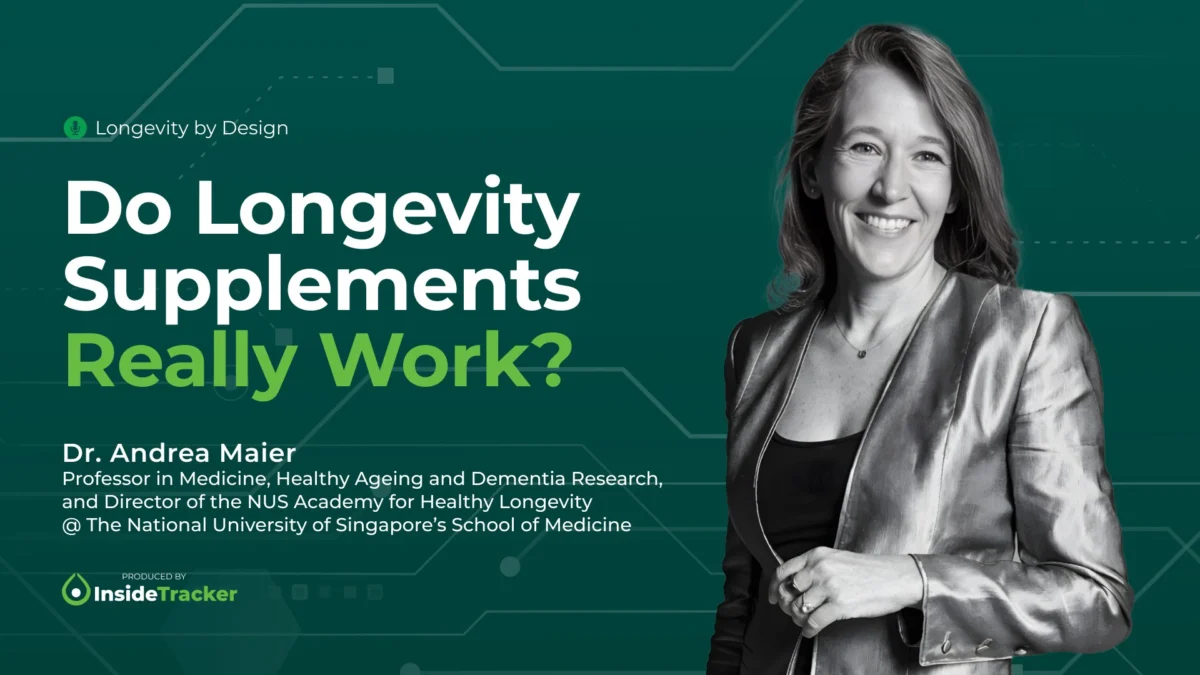
The pursuit of human longevity has transitioned from the fringes of speculative science into a rigorous clinical discipline, yet the marketplace remains flooded with products that often outpace their own evidence. In a recent detailed discussion on the Longevity by Design podcast, Dr. Andrea Maier, a Professor of Medicine and Director of the NUS Academy for Healthy Longevity at the National University of Singapore, provided a comprehensive audit of the current longevity landscape. Alongside host Dr. Gil Blander, Dr. Maier emphasized a paradigm shift in preventative healthcare: moving away from the "guesswork" of generalized supplementation toward a disciplined "test, then treat" methodology. As the global population ages at an unprecedented rate, the insights shared by Dr. Maier highlight the urgent need for clinical validation, standardized quality control, and the integration of digital biomarkers into everyday medical practice.
The Evidence-Based Reality of Multivitamins
For decades, multivitamins have been a staple of the global health industry, often marketed as a universal insurance policy against nutritional deficiencies. However, Dr. Maier’s analysis of a massive systematic review involving over five million participants suggests that the reality is far more nuanced. The data indicates that for the average, healthy adult living in a developed nation with a balanced diet, the benefits of a daily multivitamin are marginal at best. The study found no significant reduction in all-cause mortality or major cardiovascular events for this demographic.
In contrast, the evidence shifts significantly when examining specific sub-populations. For older adults or those in "at-risk" categories, multivitamin supplementation showed a demonstrable impact on cognitive health, particularly memory retention. Furthermore, certain groups experienced a stabilization or lowering of systolic blood pressure. This distinction underscores the importance of personalized nutrition; the "one-size-fits-all" approach is increasingly viewed as obsolete by geroscience experts. Dr. Maier noted that while the general public consumes these supplements in record numbers, the clinical focus must remain on identifying who actually lacks specific micronutrients before prescribing a regimen.
The Quality Crisis in the Supplement Industry
Perhaps the most alarming revelation in the discussion was the lack of consistency between supplement labels and their actual chemical contents. Dr. Maier reported on recent laboratory audits focusing on two of the most popular longevity-associated compounds: Nicotinamide Mononucleotide (NMN) and urolithin A. In several instances, independent testing revealed that products contained significantly lower concentrations of the active ingredient than advertised, and in the most egregious cases, no active compound was found at all.
This quality crisis is a byproduct of the regulatory environment governing supplements. Unlike pharmaceutical drugs, which must undergo rigorous Phase I, II, and III clinical trials to prove safety and efficacy before reaching the market, supplements are often regulated as food products. This allows manufacturers to make broad claims about "supporting" health without the burden of proof required for "treating" or "curing" disease. Dr. Maier’s findings serve as a stern warning to consumers: price and branding are not reliable proxies for purity. She advocates for the use of "pharmaceutical grade" supplements and third-party certifications to ensure that what is on the label matches what is in the capsule.
Deciphering Longevity Compounds: AKG, Spermidine, and Curcumin
The field of geroscience has identified several "hallmarks of aging"—cellular processes that, when modulated, could theoretically slow the biological clock. Dr. Maier categorized several buzzworthy compounds based on their mechanism of action and the quality of existing human trial data.
Alpha-Ketoglutarate (AKG)
AKG is a key intermediate in the Krebs cycle and has gained traction for its role in cellular energy production and epigenetic regulation. While animal models have shown impressive results in extending lifespan and healthspan, Dr. Maier pointed out that human evidence is still maturing. Current trials are focused on whether AKG can reduce "biological age" as measured by DNA methylation clocks. The challenge remains determining the optimal dosage and identifying which populations—such as those with metabolic dysfunction—stand to benefit most.
Spermidine
A polyamine found in foods like wheat germ, soy, and aged cheese, spermidine is known to induce autophagy—the body’s cellular "recycling" process. Dr. Maier highlighted that while dietary intake of spermidine is associated with lower rates of cardiovascular disease, the transition to high-dose supplementation requires more robust clinical validation. The mechanism is promising, but the industry is still searching for the "goldilocks" dose that maximizes cellular cleanup without disrupting other biological pathways.
Curcumin
Derived from turmeric, curcumin is widely praised for its anti-inflammatory and antioxidant properties. However, Dr. Maier addressed the "bioavailability" elephant in the room. Raw curcumin is notoriously difficult for the human body to absorb. While newer formulations using piperine or lipid-based delivery systems have improved absorption, the clinical focus is shifting toward its use in specific inflammatory conditions rather than as a general longevity tonic.
Melatonin and the Science of Circadian Optimization
The discussion also touched on melatonin, a hormone often misunderstood as a simple sedative. Dr. Maier reframed melatonin as a "chronobiotic"—a tool to shift the body’s internal clock. Beyond its use for jet lag, melatonin is being investigated for its antioxidant properties and its role in mitochondrial health. However, she cautioned against chronic, high-dose use without professional guidance. The goal of melatonin therapy should be to reinforce the natural circadian rhythm, particularly in older adults whose endogenous melatonin production naturally declines, rather than masking underlying sleep disorders.
The Evolution of Digital Biomarkers and Physical Function
A central theme of Dr. Maier’s philosophy is that longevity cannot be managed if it is not measured. While blood-based biomarkers (such as glucose, cholesterol, and inflammatory markers) remain vital, she emphasized the emerging role of digital biomarkers and physical function tests. These metrics provide a real-time window into an individual’s "functional age."
Dr. Maier highlighted several key indicators that are often more predictive of long-term health outcomes than a standard lipid panel:
- Grip Strength: A robust proxy for overall muscle mass and a strong predictor of frailty and mortality in later life.
- Walking Speed: Often referred to as the "sixth vital sign," gait speed reflects the integrated health of the nervous, muscular, and cardiovascular systems.
- Sit-to-Stand Tests: A simple but effective measure of lower-body power and balance.
- Wearable Data: The continuous tracking of heart rate variability (HRV), sleep architecture, and daily step counts allows clinicians to see trends over months, rather than a single snapshot from an annual physical.
By integrating these "low-tech" physical tests with "high-tech" wearable data, Dr. Maier argues that individuals can create a personalized feedback loop. If a new supplement or lifestyle intervention does not result in measurable improvements in these functional metrics over time, its value should be questioned.
The NAD+ Frontier: NMN and NR
The conversation concluded with an analysis of NAD+ precursors, specifically NMN and Nicotinamide Riboside (NR). These compounds aim to boost levels of NAD+, a coenzyme essential for energy metabolism and DNA repair that declines with age. While the scientific community is optimistic about the potential for these precursors to improve insulin sensitivity and exercise performance, Dr. Maier noted that the testing landscape for NAD+ levels is still in its infancy. Current tests can be inconsistent, making it difficult for consumers to know if their supplementation is actually raising systemic NAD+ levels to a therapeutic degree.
Broader Implications and the Future of Longevity Medicine
The work being done by Dr. Maier at the National University of Singapore represents a broader global shift toward "Geroscience-informed" medicine. This approach does not merely treat diseases like diabetes or heart disease as they appear; instead, it targets the underlying biological process of aging that makes these diseases possible.
The implications of this shift are profound. If the medical community can move from reactive care to a proactive, data-driven longevity model, the "silver tsunami" of an aging global population could be transformed from a socioeconomic crisis into an era of extended "healthspan." However, as Dr. Maier concluded, this future depends on the rigorous application of the scientific method. In a world of "biohacking" and "wellness" influencers, the most powerful tool for longevity remains the randomized controlled trial and the disciplined tracking of objective data.
For the average consumer, the message is clear: the most effective longevity "hack" is not found in a mystery bottle ordered online, but in the diligent measurement of one’s own biology and the informed, cautious application of interventions that have stood the test of clinical scrutiny. As Dr. Maier’s work continues to bridge the gap between the lab and the clinic, the path to a longer, healthier life is becoming less about hope and more about hard evidence.