



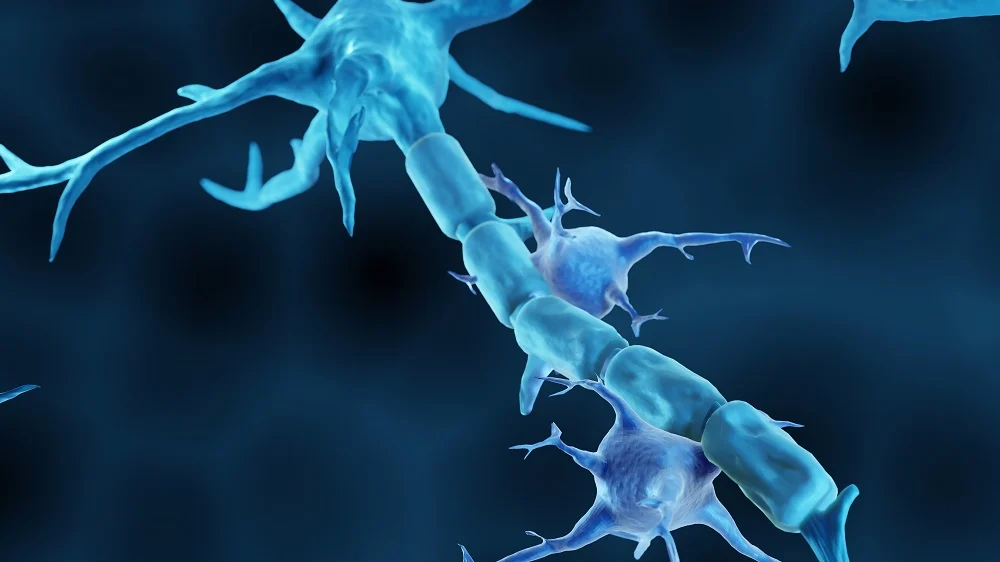
Researchers at the Daegu Gyeongbuk Institute of Science and Technology (DGIST) in South Korea have identified a promising new avenue for treating Alzheimer’s disease by targeting the signaling relationship between neurons and the brain’s resident immune cells. The study, published in the journal Brain, Behavior, and Immunity, demonstrates that the overexpression of somatostatin (SST), a neuropeptide primarily known for its inhibitory functions in the endocrine system and brain, can significantly reduce neuroinflammation and the accumulation of amyloid-beta (Aβ) plaques. Most importantly, the research indicates that this molecular intervention leads to measurable improvements in cognitive and spatial memory functions in animal models, offering hope for a new class of dementia treatments based on existing pharmacological frameworks.
The Shift Toward Neuroinflammation and Secondary Targets
For decades, Alzheimer’s disease research has been dominated by the "amyloid hypothesis," which posits that the primary cause of cognitive decline is the accumulation of amyloid-beta plaques and tau protein tangles. However, the clinical results of drugs targeting these hallmarks have been inconsistent and often modest in their efficacy. This has led the scientific community to pivot toward secondary targets and the broader ecosystem of the brain, specifically focusing on neuroinflammation.
Neuroinflammation is driven largely by microglia, the brain’s specialized immune cells. In a healthy brain, microglia act as sentinels, clearing cellular debris and maintaining synaptic health. In the context of Alzheimer’s, however, these cells often enter a state of chronic hyperactivation. Instead of clearing toxic proteins, hyperactive microglia release pro-inflammatory cytokines that exacerbate neuronal damage, creating a feedback loop of decay. The DGIST study identifies somatostatin as a critical "calming" agent that can potentially reset these immune cells to a neuroprotective state.
Somatostatin: The Molecular "Lock and Key" Mechanism
Somatostatin is a neuropeptide produced by specific inhibitory neurons. Its primary role in the central nervous system has traditionally been viewed as a regulator of neuronal excitability. However, the DGIST team, led by Professor Jiwon Um of the Center for Synapse Diversity and Specificity, hypothesized that SST plays a much larger role in immune regulation.
The researchers discovered a "lock and key" relationship: neurons produce the SST (the key), while microglia express somatostatin receptor 2 (SSTR2), which acts as the lock. By analyzing isolated cell cultures, the team confirmed that SST does not originate in microglia but is received by them. This signaling pathway appears to be a natural regulatory mechanism that prevents the immune system from overreacting to stimuli. Crucially, previous clinical data has shown that SST levels are significantly depleted in the brains of Alzheimer’s patients, suggesting that the loss of this "calming" signal may be a major contributor to the runaway inflammation seen in the disease.
Experimental Chronology: From Cell Cultures to Living Models
The research was conducted through a rigorous multi-stage process, beginning with in vitro cellular analysis and culminating in complex in vivo behavioral studies.
- In Vitro Testing (Primary Microglia): The team first treated isolated mouse microglia with varying doses of SST. They observed a dose-dependent increase in phagocytosis—the process by which microglia engulf and digest toxic particles like Aβ. Simultaneously, the treatment lowered levels of the pro-inflammatory cytokine IL-12 and increased TGF-β1, a cytokine associated with tissue repair and immune suppression.
- Healthy Animal Models: To ensure that SST overexpression did not have adverse effects on a healthy brain, the researchers used viral vectors to deliver SST genes into the dentate gyrus—a region of the hippocampus vital for memory—of healthy mice. The results showed that while it did not fundamentally alter the morphology of healthy microglia, it did reduce baseline markers of activation, suggesting a high safety profile.
- The 5xFAD Alzheimer’s Model (Early Stage): The researchers then moved to the 5xFAD mouse model, which is genetically engineered to develop rapid and severe amyloid pathology. In mice aged five months (representing early-stage disease), SST overexpression led to a significant reduction in microglial density and a reversal of genetic markers associated with harmful immune activation.
- Late-Stage Rescue (10-Month-Old Mice): Perhaps the most significant finding occurred in 10-month-old 5xFAD mice, which already possessed extensive plaque burdens. Even at this advanced stage, a two-week period of SST overexpression was sufficient to reduce the density and average size of Aβ plaques, demonstrating that the pathway is capable of "cleaning up" existing damage rather than just preventing new accumulation.
Supporting Data: Cognitive Recovery and Behavioral Impact
The biological changes observed under the microscope translated into tangible behavioral improvements. The DGIST team subjected the mice to a battery of cognitive tests, including spatial memory challenges. While some aspects of behavior, such as general anxiety and basic recognition memory, remained unchanged, the SST-treated 5xFAD mice showed a remarkable recovery in spatial navigation and memory tasks.
These results suggest that by modulating microglial activity, somatostatin helps preserve the integrity of the hippocampus. This region is one of the first to suffer damage in human Alzheimer’s patients, leading to the "wandering" and disorientation often associated with the disease. The ability of SST to improve function in the dentate gyrus specifically highlights its potential as a targeted therapy for the most debilitating symptoms of dementia.
Official Responses and Scientific Significance
Professor Jiwon Um emphasized the novelty of this neuro-immune discovery. "This study demonstrates for the first time that somatostatin, a brain neurotransmitter, can directly regulate the state of immune cells to alleviate dementia pathology and improve memory function," Um stated.
The research team noted that previous clinical trials for Alzheimer’s often failed because they focused on a single aspect of the disease or used compounds with poor safety profiles. By focusing on SST, researchers are tapping into an endogenous (naturally occurring) system that the brain already uses to maintain balance. This reduces the likelihood of the severe side effects—such as brain swelling or microhemorrhages—that have plagued recent amyloid-clearing monoclonal antibody treatments.
Broader Impact and the Potential for Drug Repurposing
One of the most exciting implications of the DGIST study is the potential for rapid clinical translation. Because the somatostatin pathway is already well-understood in the context of other diseases, drugs that target somatostatin receptors (SSTRs) are already FDA-approved and in clinical use.
For example, somatostatin analogs like Octreotide and Lanreotide are currently used to treat acromegaly (a growth hormone disorder) and certain types of neuroendocrine tumors. While these specific drugs may need modification to effectively cross the blood-brain barrier in high concentrations, the existence of an established pharmacological class significantly shortens the timeline for drug development. Repurposing existing drugs is a much faster and more cost-effective route than developing entirely new molecular entities.
Implications for the Future of Dementia Care
The study adds a vital piece to the puzzle of neurodegenerative disease. It suggests that Alzheimer’s is not just a disease of "protein clumping" but a failure of communication between different types of brain cells. When neurons lose the ability to produce somatostatin, they lose their ability to tell the microglia to "stand down," leading to the collateral damage that characterizes dementia.
Future research will likely focus on developing small-molecule SSTR2 agonists that can easily penetrate the central nervous system. Additionally, scientists may investigate whether SST levels can serve as a biomarker for early diagnosis, allowing for intervention years before the onset of significant memory loss.
In conclusion, the DGIST study represents a paradigm shift in how scientists view the relationship between neuropeptides and neuroimmunity. By demonstrating that SST can both dampen inflammation and stimulate the clearance of amyloid plaques, the research provides a dual-action therapeutic strategy. As the global population ages and the prevalence of Alzheimer’s continues to rise, the possibility of repurposing established drugs to modulate this newly discovered pathway offers a beacon of hope for patients and families worldwide.