



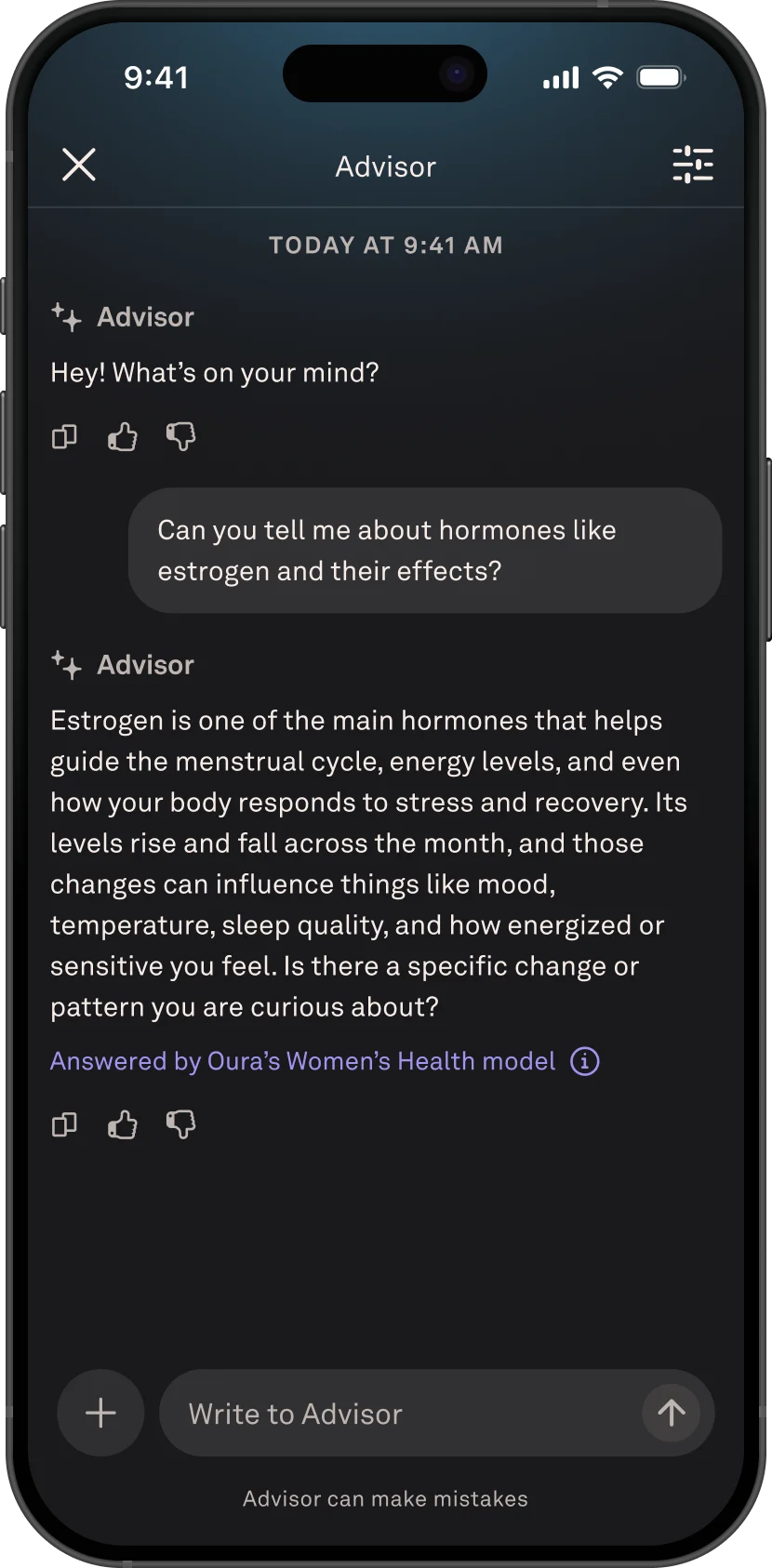
Oura, the leader in smart ring technology and personal health monitoring, has officially announced the launch of a first-of-its-kind proprietary large language model (LLM) specifically engineered to address the complexities of women’s health. Integrated directly into the Oura Advisor experience, this specialized AI represents a fundamental shift in the wearable technology industry, moving away from general-purpose generative AI toward highly specialized, clinically grounded systems. By synthesizing established medical standards, peer-reviewed research, and individual biometric data, the new model aims to provide women with personalized, evidence-based guidance across the entire reproductive spectrum, from the onset of menstruation through the transition into menopause.
The introduction of this model marks a significant milestone in the evolution of the Oura platform. While the company has long been recognized for its industry-leading sleep and activity tracking, this latest development signals an aggressive expansion into the "FemTech" sector—a market increasingly defined by a demand for more sophisticated, data-driven health insights. The model is not merely a chatbot; it is a sophisticated analytical tool designed to interpret long-term biometric trends, such as heart rate variability (HRV), body temperature fluctuations, and sleep patterns, through the specific lens of female physiology.
A New Paradigm in Clinical AI Integration
The technical architecture of Oura’s new women’s health model is built upon a foundation of rigorous clinical vetting. Unlike general-purpose AI tools that scrape the broad and often unreliable internet for information, Oura’s model draws from a curated repository of medical knowledge. This knowledge base has been meticulously reviewed by Oura’s in-house team of board-certified clinicians and women’s health experts. This "human-in-the-loop" approach ensures that the guidance provided is not only scientifically accurate but also safe and non-dismissive.
A key differentiator for this model is its ability to integrate longitudinal data. Most AI-driven health tools provide "snapshot" advice based on a single query. In contrast, Oura Advisor utilizes the years of biometric signals collected by the ring to provide context-aware responses. If a user asks about a sudden change in their menstrual cycle, the model does not just offer a generic list of causes; it analyzes that user’s specific stress levels, sleep quality, and temperature trends over the preceding months to offer a tailored perspective. This level of personalization is designed to bridge the gap between daily self-monitoring and professional medical consultation.
Addressing the Information Gap in Women’s Health
The launch comes at a time when digital health literacy is becoming a primary concern for public health officials. According to a 2025 survey, nearly 80 percent of U.S. adults turn to the internet as their first stop for diagnosing symptoms or understanding health conditions. Notably, nearly two-thirds of these individuals report encountering AI-generated content in their search results. For women, this reliance on digital information is often born out of necessity, as many feel their concerns are overlooked or "gaslit" in traditional medical settings.
Historically, medical research has suffered from a significant "gender data gap." For decades, clinical trials primarily focused on male subjects, leading to a lack of understanding regarding how various conditions manifest in the female body. By developing an LLM specifically for women’s physiology, Oura is attempting to counteract this systemic bias. The model is intentionally tuned to be empathetic and supportive, acknowledging the "lived experiences" of women. This involves recognizing that hormonal fluctuations throughout the month—and throughout life stages like perimenopause—profoundly impact energy, recovery, and cognitive function.
Strategic Vision and Leadership Perspectives
The development of the model was led by a cross-functional team of medical and technical experts who emphasized the need for a responsible deployment of AI. Ricky Bloomfield, MD, Oura’s Chief Medical Officer, highlighted that the complexity of women’s health demands more than a "one-size-fits-all" approach. He noted that by grounding the model in trusted clinical science and real-world biometric data, Oura is setting a new industry standard for "responsible intelligence."
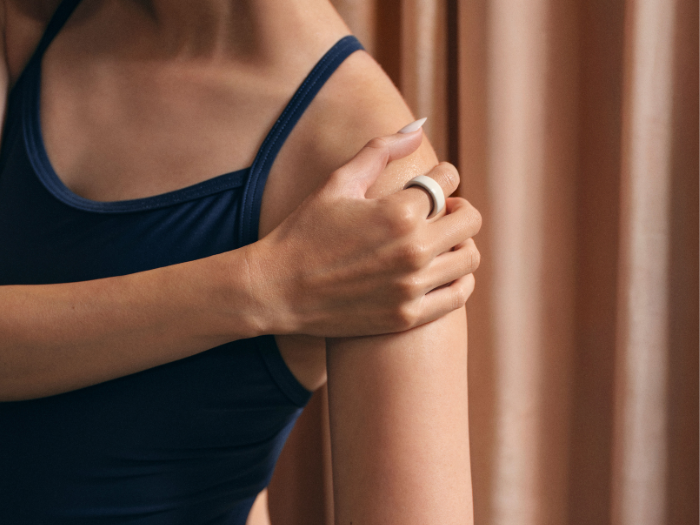
Further emphasizing the clinical utility of the tool, Chris Curry, MD, a board-certified OB/GYN and Oura’s Clinical Director of Women’s Health, stated that the model serves as a preparation tool for clinical visits. Dr. Curry pointed out that the AI helps translate complex physiological data into clear, compassionate language. This empowers women to enter their doctors’ offices with a more comprehensive understanding of their symptoms, backed by data, thereby facilitating more productive and confident conversations with healthcare providers.
Privacy and Data Security in the Age of AI
As AI becomes more integrated into personal health, the issue of data privacy has moved to the forefront of the public discourse. This is particularly sensitive in the realm of reproductive health, where data security has taken on legal and political dimensions in several jurisdictions. Oura has addressed these concerns by building its women’s health model on a privacy-first foundation.
The company confirmed that the model is hosted entirely on Oura-controlled infrastructure. This ensures that personal health data and conversations within the Oura Advisor interface are never sold to third parties or used to train public AI models. By maintaining a closed ecosystem, Oura aims to build trust with a demographic that is increasingly wary of how their sensitive health information is handled by large technology corporations.
Chronology of Oura’s Evolution Toward Women’s Health
The launch of the custom LLM is the latest step in a multi-year strategy to dominate the women’s health wearable market.
- 2021: Oura introduced Period Prediction, using temperature sensors to provide more accurate cycle tracking than traditional calendar-based methods.
- 2022: The company partnered with Natural Cycles, the first FDA-cleared birth control app, allowing users to sync Oura Ring data for contraceptive purposes.
- 2023: Oura expanded its reproductive health suite to include Pregnancy Insights, helping expectant mothers track their physiological changes across trimesters.
- 2024: The "Oura Advisor" AI beta was launched, testing the waters for conversational health coaching.
- 2025: The current launch of the proprietary LLM marks the culmination of these efforts, moving from simple data visualization to complex, conversational analysis.
Broader Industry Impact and Future Implications
The move by Oura is expected to trigger a response from other major players in the wearable space, such as Apple, Samsung, and Google (Fitbit). As the market for general fitness tracking reaches saturation, the industry is pivoting toward "specialized health," where the value lies in the depth and accuracy of insights rather than just the collection of steps or calories.
The success of this model could pave the way for other specialized LLMs within the Oura ecosystem. Industry analysts speculate that Oura may eventually release custom models for metabolic health, cardiovascular recovery, or mental health, each grounded in the same clinical rigor applied to the women’s health model. This "modular" approach to AI allows for a higher degree of accuracy and safety compared to a single, monolithic AI attempting to cover all aspects of human biology.
However, the company remains clear on the limitations of the technology. In its official announcement, Oura reiterated that the Oura Ring is not a medical device. The AI guidance is intended for informational and educational purposes and should not be used to diagnose, treat, or prevent medical conditions. Despite this disclaimer, the potential for such technology to improve the "pre-clinical" experience—the time between a user noticing a symptom and seeking professional help—is immense.
By focusing on the "longitudinal data" that makes the Oura Ring unique, the company is positioning itself not just as a hardware manufacturer, but as a sophisticated data science firm. The ability to tell a woman not just what is happening in her body, but why it might be happening based on her unique history, represents a significant leap forward in the quest for truly personalized medicine. As this technology continues to mature, it will likely become an indispensable tool for women navigating the complexities of their health across every stage of life.