



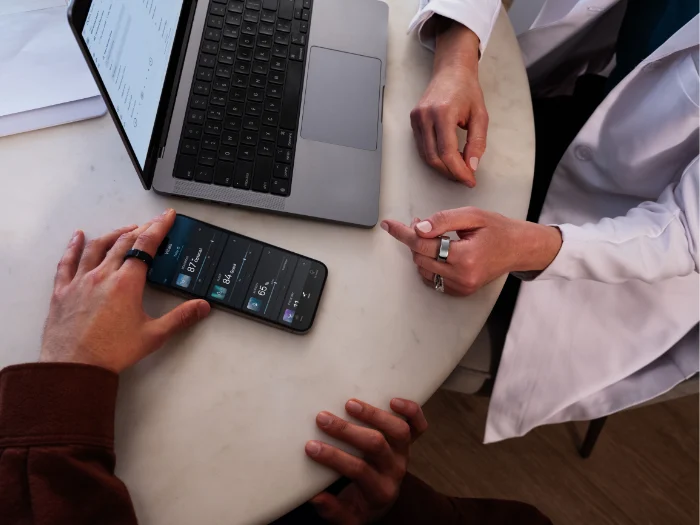
Last week, at the Centers for Medicare & Medicaid Services (CMS) HealthTech Ecosystem Live! First Wave Launch event, Oura Health unveiled Oura Health Records, a significant expansion of its platform capabilities that integrates electronic health records (EHR) directly into the Oura App. This development represents a pivotal shift for the wearable technology industry, moving beyond the tracking of daily activity and sleep metrics toward a more comprehensive, clinically integrated health management system. By allowing members to bridge the gap between their daily biometric data and their formal medical histories, Oura aims to provide a longitudinal view of health that has historically been fragmented across various provider portals and disconnected devices.
The introduction of Oura Health Records is designed to serve as a centralized hub for personal health information. For users managing chronic conditions—such as cardiovascular disease, diabetes, or metabolic disorders—the ability to view clinical data, such as laboratory results and physician notes, alongside real-time biometrics like heart rate variability (HRV), sleep stages, and activity levels, offers a new level of context-aware insight. This integration is entirely opt-in, reflecting a privacy-first architecture where the user retains full sovereignty over their data and the specific information they choose to share with the platform.
The Evolution of Healthcare Interoperability and the White House Pledge
The launch of Oura Health Records is not an isolated product update but rather the fulfillment of a strategic roadmap established over the past several years. In 2023, Oura participated in a high-profile summit at the White House, where the company made a formal pledge to advance healthcare interoperability. This commitment was aligned with broader federal efforts, led by the Office of the National Coordinator for Health Information Technology (ONC) and CMS, to break down data silos that prevent patients from accessing and utilizing their own health information.
Oura’s commitment focused on two primary pillars: the development of a conversational AI assistant and the creation of tools for chronic disease prevention and management. The AI assistant is envisioned as a bridge between complex medical data and consumer understanding. With explicit patient consent, this AI can access selected health information from CMS-aligned networks to deliver personalized educational content and guidance. For example, if a user’s EHR indicates a pre-diabetic status, the AI can correlate this with the user’s Oura-tracked activity and sleep patterns to suggest lifestyle modifications or prompt a consultation with a healthcare professional.
The second pillar of the pledge addresses the growing crisis of diabetes and obesity in the United States. According to the Centers for Disease Control and Prevention (CDC), more than 38 million Americans have diabetes, and approximately 96 million adults have prediabetes. By integrating EHR data, Oura can provide more tailored guidance that accounts for a user’s clinical diagnoses and medications, moving the wearable from a general wellness device to a targeted health management tool.
Technical Framework: Bridging Biometrics and Clinical Data
The technical achievement of Oura Health Records lies in its ability to unify disparate data streams. Clinical information typically resides in highly regulated, secure databases managed by hospital systems and insurers. These systems often use different standards, although the industry has been moving toward the Fast Healthcare Interoperability Resources (FHIR) standard to facilitate easier data exchange.
Oura’s new experience allows members to import and unify records from multiple healthcare providers into a single personal health record (PHR). This process transforms what are often static, one-off reports into a living, longitudinal record. When a user views their clinical results within the Oura App, those results are placed in the context of their "lived experience." For instance, a user might see a trend in their blood glucose levels or cholesterol alongside months of data regarding their stress levels and sleep quality. This contextualization is critical for proactive health management, as it helps users understand how their daily habits directly influence their clinical outcomes.
The "First Wave Launch" at the CMS event served as a demonstration of how private sector innovation can align with public sector goals. CMS has been a vocal advocate for the "Blue Button" initiative and other policies that mandate provider transparency and patient access to data. By becoming an active participant in this ecosystem, Oura is positioning itself as a key player in the "HealthTech Ecosystem," a term used by CMS to describe the network of apps, providers, and payers working to modernize American healthcare.
Strategic Implications for Chronic Disease Management
The focus on chronic conditions is a strategic move that reflects the current pressures on the global healthcare system. Chronic diseases are the leading causes of death and disability and the leading drivers of the nation’s $4.5 trillion in annual health care costs. Traditional healthcare models are often episodic, meaning patients only receive care when they visit a clinic. Wearables like the Oura Ring offer the possibility of continuous monitoring, which is essential for managing conditions that fluctuate daily.
By integrating EHR data, Oura can help bridge the "information gap" that occurs between doctor visits. A physician might see a patient once every six months, but the Oura Ring collects data every second of every day. If the app can flag that a patient’s resting heart rate has increased significantly following a change in medication noted in their EHR, it provides an early warning system that was previously unavailable. This proactive approach is expected to improve patient outcomes and potentially reduce emergency room visits by facilitating earlier interventions.
Industry analysts suggest that this move puts Oura in more direct competition with tech giants like Apple and Google (Fitbit). Apple Health has offered EHR integration for several years, but Oura’s emphasis on "context-aware insights" and its specialized form factor—the ring—appeals to a demographic looking for discreet, continuous monitoring without the distractions of a smartwatch.
Privacy-First Architecture and User Consent
In an era of increasing concern over data privacy, particularly regarding sensitive medical information, Oura has emphasized its "privacy-first" approach. The company has stated that the EHR integration is strictly opt-in. Users must navigate a series of consent screens to authorize the connection between their healthcare providers and the Oura App.
Furthermore, Oura’s data protection protocols are designed to ensure that clinical data is handled with the same level of security as biometric data. This includes encryption both at rest and in transit. By keeping the user in control of what data is shared and who can see it, Oura aims to build trust in an ecosystem where consumers are often wary of how their personal information is monetized. The company has reiterated that it does not sell user data, a stance that distinguishes it from some other players in the wearable and health app space.
The Role of Generative AI in Personal Health
A significant component of Oura’s future vision involves responsible, clinically informed conversational AI. The rise of Large Language Models (LLMs) has created new opportunities for interpreting complex data. However, in a medical context, the stakes are high. Oura’s AI features are being developed to provide guidance rather than definitive diagnoses, serving as a navigational tool to help users understand their information and find the right resources.
The AI assistant is designed to synthesize the unified data—the EHR records and the biometric signals—to answer user queries in natural language. A user might ask, "How has my sleep improved since I started my new blood pressure medication?" The AI can then analyze the medication start date from the EHR and the sleep quality trends from the Oura Ring to provide a data-driven answer. This level of personalized feedback is intended to empower members to ask more informed questions during their professional medical consultations.
Future Outlook and Market Impact
The launch of Oura Health Records marks the beginning of a multi-year effort to redefine the role of wearables in the healthcare continuum. As more providers and patients adopt digital health tools, the demand for interoperable systems will only increase. Oura’s participation in the CMS HealthTech Ecosystem indicates that the company is looking beyond the consumer wellness market and toward a future where wearables are integrated into formal clinical workflows.
The broader implications for the industry are significant. If successful, Oura’s model could encourage other wearable manufacturers to pursue deeper clinical integrations, leading to a more holistic approach to health data. For healthcare providers, this shift means they may soon have access to more comprehensive patient data, provided the patients choose to share it. This could lead to more personalized treatment plans and a shift toward value-based care, where outcomes are prioritized over the volume of services provided.
As Oura continues to build on these features, the focus will remain on maintaining the balance between advanced technological capabilities and the core principles of privacy and user consent. The "First Wave" launch is a clear signal that the future of personal health lies in the seamless integration of the clinical and the personal, providing individuals with the tools they need to navigate their health journey with confidence and clarity.