



Venturing into new therapeutic or coaching territories with clients, whether exploring intricate relationship dynamics or working to fortify self-esteem, often presents a significant challenge for practitioners. While the desired client outcome is clear, charting a precise and effective route to achieve it can be a daunting task. Building a comprehensive program from the ground up demands more than just clinical expertise; it requires a meticulously considered arc of change that strategically sequences techniques, anticipates common client responses, and consistently maintains momentum across multiple sessions. This intricate development process often consumes valuable time and resources that practitioners could otherwise dedicate to client engagement.
Addressing a Growing Need in Mental Wellness
The demand for structured, evidence-based mental wellness interventions has surged in recent years. According to reports from the World Health Organization and various mental health advocacy groups, conditions such as low self-esteem, difficulties in coping with life events, and relationship challenges are widespread, affecting millions globally. For instance, studies indicate that a significant portion of the adult population struggles with self-esteem issues, impacting career progression, personal well-being, and social interactions. Similarly, the prevalence of adverse life events, from health crises to relationship dissolutions, underscores a universal need for effective coping mechanisms. Relationship distress, too, remains a pervasive issue, contributing to stress and reduced life satisfaction for many.
In response to this escalating need and the inherent complexities faced by mental health professionals and coaches, PositivePsychology.com has introduced its Session Blueprint Series. This innovative collection offers a comprehensive, ready-to-implement solution designed to streamline the therapeutic and coaching process. Each program within the series provides practitioners with a clear, step-by-step pathway from initial intake to successful outcome, ensuring clients embark on a coherent, impactful journey towards improved well-being. The series represents a significant development in the provision of accessible, high-quality psychological support, aligning with the broader industry trend towards standardized, yet flexible, intervention models.
The Evolution of Structured Interventions
The concept of structured therapeutic interventions is not new, tracing its roots back to the development of manualized treatments in the mid-20th century. However, the 21st century has seen an acceleration in the demand for such programs, driven by a greater emphasis on evidence-based practices, measurable outcomes, and the need for scalability in mental health services. Positive Psychology, as a field, has played a crucial role in this evolution, shifting focus from pathology to strengths and well-being. Its principles emphasize building resilience, fostering positive emotions, and cultivating meaningful relationships, providing a robust framework for proactive and growth-oriented interventions. The Session Blueprint Series stands as a testament to this evolution, blending rigorous psychological science with practical application to empower both practitioners and clients.
Understanding the Session Blueprint Series
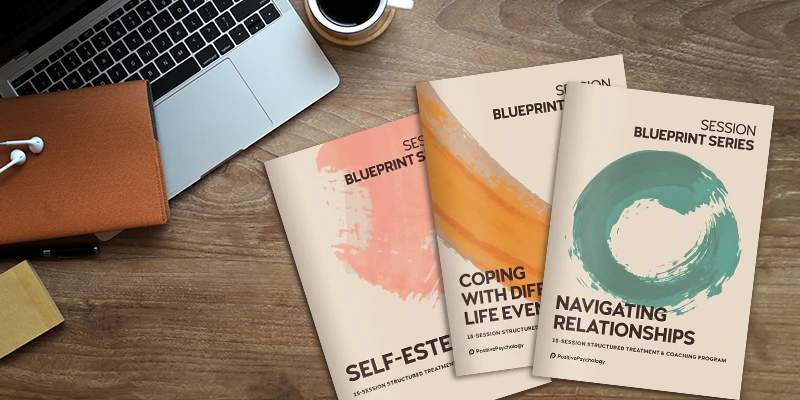
The Session Blueprint Series is a carefully curated collection of three fully developed, 15-session treatment or coaching programs. Each blueprint is meticulously focused on a distinct, yet interconnected, core topic critical to adult well-being. These programs are not merely collections of techniques; rather, they are holistic journeys, complete with structured sessions, client workbooks, and outcome measures, ready for immediate delivery. This inherent flexibility also allows practitioners to modify the content as required by their specific practice context and individual client needs, ensuring a personalized touch within a structured framework.
Target Audience and Application

The Session Blueprint Series is specifically designed for coaches and therapists who work with adult clients facing common yet significant issues. A key differentiator of these blueprints is their intentional use of neutral, non-pathologizing language. This approach emphasizes skills development, pattern recognition, and observable goal attainment rather than clinical diagnoses, making the programs equally appropriate for both coaching and therapeutic practices. This inclusivity broadens the reach of these valuable tools, catering to a wider spectrum of mental wellness professionals.
Identifying the most suitable blueprint for a client often requires looking beyond the surface presentation of their challenges. While each installment is built around a central theme, clients will present with varied manifestations of these themes. Practitioners are encouraged to delve into the underlying patterns to determine which blueprint best aligns with the client’s core needs and aspirations.
Deep Dive into Each Blueprint
1. Self-Esteem Blueprint: Cultivating Inner Strength and Freedom
The self-esteem blueprint is specifically crafted to assist clients whose relationship with their self-image significantly impacts their engagement with life and their interpersonal connections. Low self-esteem is a pervasive issue, often linked to anxiety, depression, social withdrawal, and underachievement. According to a meta-analysis published in Psychological Bulletin, low self-esteem is a robust predictor of various mental health issues and difficulties in social functioning. This blueprint offers a structured pathway for clients to challenge ingrained negative self-perceptions and build a more resilient and authentic sense of self.
This program is an ideal fit for clients who:
- Consistently doubt their capabilities, despite evidence to the contrary.
- Avoid social situations or opportunities due to fear of judgment or inadequacy.
- Struggle with perfectionism, constantly feeling they are not "good enough."
- Experience difficulty asserting their needs or setting healthy boundaries.
- Find their self-worth heavily dependent on external validation.
The self-esteem blueprint conceptualizes self-esteem not as a fixed trait, but as a dynamic way of responding to the world that can evolve and strengthen over time. The overarching aim is to foster greater flexibility in how self-esteem manifests, thereby granting clients greater freedom and agency in their lives. The program is thoughtfully divided into three progressive phases:
- Phase 1: Awareness and Understanding: Clients begin by exploring the origins and current manifestations of their self-esteem patterns, gaining insight into their internal narratives and their impact.
- Phase 2: Skill Building and Reframing: This phase introduces practical strategies to challenge negative thoughts, cultivate self-compassion, and develop new, healthier responses to self-perception.
- Phase 3: Integration and Maintenance: The final phase focuses on integrating new insights and behaviors into daily life, consolidating gains, and developing strategies for long-term maintenance of improved self-esteem.
Progress throughout this blueprint is rigorously monitored using the Rosenberg Self-Esteem Scale (1979), a widely validated measure for both baseline assessment and outcome evaluation. This scientific approach ensures that the program’s efficacy can be objectively tracked, providing both practitioner and client with concrete evidence of growth.
2. Coping with Difficult Life Events Blueprint: Building Resilience Amidst Adversity
Life is inherently marked by challenging events, ranging from personal losses and health crises to relationship changes and significant life transitions. While these events are unavoidable, the manner in which individuals cope with them profoundly influences their well-being. The American Psychological Association reports that effective coping strategies are crucial for mitigating the negative impacts of stress and trauma. This blueprint serves as a targeted intervention to help clients regain their footing and navigate the aftermath of adverse experiences, focusing on enhancing their coping styles rather than solely on the event itself.

This program is particularly beneficial for clients who:
- Feel overwhelmed or paralyzed by a recent or past traumatic event.
- Struggle with persistent grief, sadness, or anger following a loss.
- Exhibit maladaptive coping mechanisms, such as avoidance, substance use, or isolation.
- Are facing a significant life transition (e.g., career change, relocation, retirement) with difficulty adapting.
- Find themselves repeatedly stuck in patterns of rumination or self-blame after difficult experiences.
The coping blueprint is broadly applicable because it prioritizes coping styles and their efficacy as the primary levers for change. It acknowledges that while events may differ, the underlying processes of adaptation and resilience share common threads. The program’s three phases guide clients through a journey of healing and empowerment:
- Phase 1: Acknowledgment and Assessment: Clients explore the nature of the difficult event, identify their current coping strategies (both adaptive and maladaptive), and understand their emotional landscape.
- Phase 2: Developing Adaptive Coping Skills: This phase introduces a repertoire of evidence-based coping mechanisms, including mindfulness, emotion regulation techniques, problem-solving strategies, and seeking social support.
- Phase 3: Integration and Future Resilience: Clients practice applying newly acquired skills in various contexts, consolidate their learning, and develop a personalized plan for navigating future challenges with enhanced resilience.
Throughout the program, the General Self-Efficacy Scale (Schwarzer & Jerusalem, 1995) is employed to assess changes in clients’ confidence in their ability to utilize coping strategies effectively. This measure provides valuable insights into their growing sense of agency and mastery over their circumstances.
3. Navigating Relationships Blueprint: Fostering Healthier Connections
Relational patterns, often deeply ingrained from early experiences of connection, rarely arise from deliberate choice. Instead, they are molded by formative interactions and can significantly impact current relationships, leading to recurring challenges in closeness, tension, uncertainty, and vulnerability. Research consistently demonstrates that healthy relationships are a cornerstone of overall well-being, while relationship distress can lead to significant psychological strain. This relationship blueprint empowers clients to identify and progressively transform these unhelpful patterns, paving the way for more fulfilling and authentic connections.
This blueprint is often an excellent fit for clients who:
- Experience recurring conflicts or misunderstandings in their significant relationships.
- Struggle with intimacy or vulnerability, often creating emotional distance.
- Find themselves in a cycle of unhealthy relationship choices or dynamics.
- Have difficulty communicating their needs or asserting boundaries effectively.
- Recognize similar problematic patterns appearing across different relationships (e.g., romantic, familial, professional).
The relationships blueprint helps clients understand that their relational dynamics are not fixed but are amenable to change through conscious effort and skill development. The program’s three phases are designed to systematically address and transform these patterns:
- Phase 1: Pattern Identification and Insight: Clients explore the history and current manifestations of their relational patterns, gaining insight into their attachment styles and interactional dynamics.
- Phase 2: Skill Development for Healthy Relating: This phase focuses on building crucial relational skills, including effective communication, conflict resolution, empathy, boundary setting, and fostering secure attachment.
- Phase 3: Application and Sustainable Change: Clients practice applying new skills in real-world scenarios, consolidate their learning, and develop strategies for maintaining healthier, more satisfying relationships over time.
Progress within this blueprint is tracked using the Experiences in Close Relationships – Short Form (Wei et al., 2007), an attachment-based measure included directly within the program. This allows practitioners and clients to monitor shifts in attachment anxiety and avoidance, providing a clear indication of progress towards more secure and fulfilling relational dynamics.
What’s Inside Each Blueprint: A Consistent and Repeatable Structure
Each program in the Session Blueprint Series adheres to a consistent, repeatable session structure, ensuring ease of implementation for practitioners and a coherent experience for clients. Beyond the 15-session practitioner manual that details each session’s objectives, activities, and discussion points, each blueprint also includes:

- Client Workbook: Designed to facilitate client engagement and reinforce learning between sessions, offering exercises, reflections, and psychoeducational content.
- Scientifically Validated Outcome Measure: For objective baseline assessment and end-of-program evaluation, allowing for data-driven tracking of client progress.
- Training Videos: Comprehensive guides for practitioners on the theoretical underpinnings and practical application of the blueprint.
- Instructional Videos: Offering specific guidance on introducing and working with particular techniques and exercises within the program.
This comprehensive package ensures that practitioners have all the necessary tools and support to deliver a high-quality, impactful intervention without the burden of extensive program development.
Helpful Tips for Seamless Integration
To maximize the effectiveness of the Session Blueprint Series, PositivePsychology.com provides several practical tips for practitioners:
- Embrace Flexibility: While structured, the blueprints are designed to be adaptable. Practitioners should feel empowered to tailor the pace and depth of sessions to individual client needs, allowing for detours when emergent issues arise.
- Foster Collaboration: Engage clients actively in the process, inviting their feedback and perspectives. This co-creation fosters a sense of ownership and enhances client motivation.
- Utilize Outcome Measures Strategically: The included validated scales are powerful tools. Discuss results with clients regularly to celebrate progress, identify areas needing more attention, and reinforce the evidence-based nature of the work.
- Integrate Coaching/Therapy Questions: Pair the blueprint’s structured activities with well-chosen open-ended questions to deepen reflection, uncover underlying beliefs, and personalize the learning experience.
- Emphasize Practice and Integration: The real work happens between sessions. Encourage clients to apply new skills in their daily lives and discuss their experiences, challenges, and successes.
These tips, combined with a practitioner’s clinical acumen, ensure that the blueprints serve as powerful frameworks rather than rigid scripts, facilitating profound and lasting change. The materials and session structure are also designed to function effectively within a typical 45-minute format, whether delivered online or in person, offering further flexibility for diverse practice settings.
Broader Implications and the Future of Mental Wellness
The introduction of the Session Blueprint Series signifies a notable trend in the mental wellness industry: the increasing shift towards scalable, evidence-based, and practitioner-friendly solutions. By providing ready-to-use, scientifically grounded programs, PositivePsychology.com addresses several critical needs:
- Standardization of Care: While allowing for personalization, the blueprints offer a level of standardization that can enhance the quality and consistency of care across different practitioners.
- Accessibility to Effective Interventions: By reducing the barrier of program development, more practitioners, especially those in smaller practices or new to the field, can offer sophisticated interventions.
- Professional Development: The included training and instructional videos serve as valuable professional development tools, enhancing practitioner skills and confidence.
- Improved Client Outcomes: The structured, phased approach, coupled with validated outcome measures, is designed to optimize client progress and provide a clear, measurable path to improvement.
As the global focus on mental health intensifies, resources like the Session Blueprint Series are poised to play a crucial role in making high-quality psychological support more accessible and effective. They represent a bridge between rigorous academic research and practical, real-world application, empowering practitioners to deliver transformative experiences and helping clients navigate the complexities of modern life with greater resilience and well-being.
For coaches and psychologists ready to infuse more structure, confidence, and measurable impact into their client work, the Session Blueprint Series offers a compelling solution. The opportunity to explore these programs and immediately begin delivering more structured, impactful client journeys is available through the PositivePsychology.com store. The series stands as a testament to the power of structured, positive psychology interventions in fostering enduring personal growth and flourishing.