


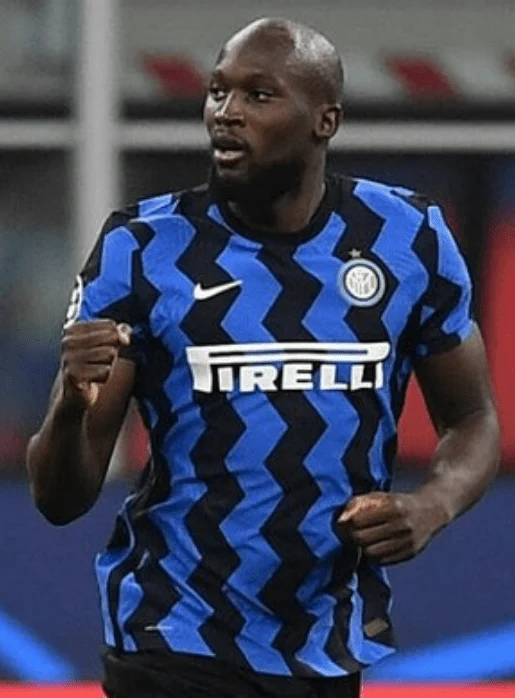
The intersection of high-performance athletics and nutritional science has long been a subject of intense scrutiny, but few cases illustrate the profound impact of dietary intervention as vividly as the career trajectory of Romelu Lukaku. As one of the most prominent strikers in global football, Lukaku’s journey from a perceived slump at Manchester United to a dominant, Scudetto-winning force at Inter Milan provides a definitive case study in the maxim that physical exertion cannot compensate for suboptimal nutrition. While professional athletes operate at the absolute limits of human physiological capacity, the biological reality remains that even the most rigorous training regimens are secondary to the fuel provided to the body. This realization has sparked a broader conversation within sports science regarding the "constrained total energy expenditure" model, which suggests that the human body has a limit on how many calories it can effectively burn, making the quality of caloric intake the ultimate arbiter of physical composition and performance.
The Manchester Period and the Perception of Physical Decline
In 2017, Romelu Lukaku joined Manchester United for a fee of approximately £75 million, carrying the expectations of one of the world’s most storied clubs. Despite a respectable scoring record, his tenure in the English Premier League was increasingly defined by criticisms regarding his mobility, first touch, and overall physical "heaviness." By the 2018-2019 season, observers noted a lack of the explosive pace that had characterized his early career at Everton and Anderlecht.
At the time, speculation regarding his fitness was rampant. Reports suggested that Lukaku had gained significant muscle mass to cope with the physicality of the Premier League, but this additional weight appeared to hinder his agility. The player himself later admitted that something was fundamentally wrong with his digestive system and metabolic rate during this period. Despite training several hours a day under world-class coaching staff and participating in high-intensity matches twice a week, the sheer volume of exercise was insufficient to maintain his ideal playing weight. This period highlighted a critical flaw in traditional athletic conditioning: the assumption that a high-volume workload provides a "blank check" for dietary choices.
The Transfer to Inter Milan and the Mediterranean Intervention
In August 2019, Lukaku transferred to Inter Milan in Italy’s Serie A. This move marked a turning point not just in his career, but in his physiological profile. Under the management of Antonio Conte—a coach renowned for his obsessive attention to detail regarding player biometrics—Lukaku was immediately placed under the supervision of the club’s medical and nutritional staff.
The diagnostic phase of his arrival revealed that his digestive system was "malfunctioning," preventing him from efficiently processing nutrients and contributing to a weight that was unsuitable for his 6’3" frame. The subsequent intervention was not focused on increasing his time in the gym, but on a radical overhaul of his plate. Over the course of his first few months in Italy, Lukaku lost 16 pounds (approximately 7 kilograms). This transformation was achieved primarily through the "Bresaola diet," a regimen common in Italian high-performance circles that emphasizes lean proteins, specific complex carbohydrates, and an abundance of alkaline-forming vegetables.
The Specifics of the Nutritional Protocol
The nutritional strategy employed by Lukaku at Inter Milan was built on several pillars of modern dietetics. The player has since detailed the specific components of his daily intake, which centered on fish, sweet potatoes, shiitake mushrooms, and shirataki noodles. Shirataki noodles, in particular, are a notable inclusion; made from the konjac plant, they are extremely low in calories and high in glucomannan, a fermentable fiber that aids in digestion and provides a sense of satiety without the glycemic load of traditional pasta.
Key elements of the "Lukaku Protocol" included:
- Protein Sources: A heavy reliance on white fish and chicken breast, providing high-quality amino acids for muscle repair without the saturated fats found in red meats.
- Carbohydrate Management: A shift toward "slow-release" carbohydrates that prevent insulin spikes, which can lead to fat storage even in active individuals.
- Supplements: The strategic use of L-carnitine and specific vitamin complexes. L-carnitine is an amino acid derivative that plays a crucial role in energy production by transporting fatty acids into the mitochondria to be burned for energy.
- Hydration and Alkalinity: An emphasis on large salads and greens to manage systemic inflammation, a common byproduct of high-intensity professional sports.
Comparative Performance Data and Statistical Surge
The impact of this nutritional pivot was immediately reflected in the data. During his final season at Manchester United (2018-19), Lukaku scored 15 goals across all competitions. In his debut season at Inter Milan (2019-20), following his 16-pound weight loss, that number rose to 34 goals. He followed this in the 2020-21 season with 30 goals and 10 assists, leading Inter to their first Serie A title in eleven years and earning the league’s Most Valuable Player award.

Beyond the raw goal-scoring statistics, his physical metrics showed a significant increase in top speed and "responsiveness." Sports analysts noted that his ability to sustain high-intensity sprints in the 80th minute of a match—previously a weakness—had become a core strength. This supports the scientific consensus that a leaner body composition reduces the metabolic cost of movement, allowing for greater "repeat sprint ability" (RSA), a vital metric in modern football.
Expert Analysis: The "Out-Exercising" Fallacy
The Lukaku case serves as a high-profile debunking of the "calories in, calories out" (CICO) oversimplification. While CICO is thermodynamically true, it ignores the hormonal and metabolic complexities of how different foods are processed. Nutritionists argue that for an athlete of Lukaku’s size, the type of fuel is more important than the quantity.
Dr. Matteo Pincella, the nutritionist credited with much of Inter Milan’s success during that period, has often emphasized that "the player is like a Formula 1 car." Using low-grade fuel in a high-performance engine leads to carbon buildup and mechanical failure. In human terms, this manifests as inflammation, lethargy, and an inability to shed visceral fat. The "anti-aging" community has long championed these principles, noting that the same dietary habits that allow an athlete to dominate a football pitch are the ones that preserve cellular integrity and metabolic health in the general population.
Broader Implications for Public Health and Longevity
The lessons learned from Romelu Lukaku’s transformation extend far beyond the touchlines of the San Siro stadium. For the general population, the narrative that one can "earn" a poor meal through a session on the treadmill is a major contributor to the global obesity epidemic. Research published in the British Journal of Sports Medicine has repeatedly indicated that while physical activity is essential for health, it is a relatively inefficient tool for weight loss when compared to dietary restriction.
The "Lukaku Lifestyle"—characterized by the restriction of processed foods, the prioritization of high-quality proteins, and the inclusion of nutrient-dense vegetables—aligns with the "Outer Perimeter" shopping strategy. This strategy encourages consumers to shop the edges of the grocery store (produce, meat, dairy) while avoiding the center aisles, which are typically stocked with shelf-stable, highly processed goods.
Official Responses and the Future of Sports Science
Following Lukaku’s public comments regarding his weight loss, several other clubs have reportedly overhauled their nutritional departments. The trend in elite sport is moving toward "personalized nutrition," where players undergo regular blood work and DNA testing to determine which foods cause inflammatory responses.
In an interview with Tribal Football, Lukaku reflected on the change: "Since following this lifestyle, I feel better on the pitch, more responsive and faster. I have reached another level, physically and mentally." This mental aspect is often overlooked; stable blood sugar levels and reduced systemic inflammation are closely linked to cognitive function, focus, and psychological resilience—attributes just as necessary for a professional striker as they are for a corporate executive or a stay-at-home parent.
Conclusion: The Primacy of the Plate
The story of Romelu Lukaku is a powerful reminder that biology does not grant exceptions, even to the world’s most elite physical specimens. His journey from a struggling, "overweight" striker in England to a lean, world-class champion in Italy underscores a fundamental truth of human physiology: nutrition is the foundation upon which all physical achievement is built.
By focusing on quality calories, metabolic health, and the specific physiological needs of his body, Lukaku did more than just save his career; he provided a roadmap for anyone looking to optimize their health. Whether the goal is to win a European league title or simply to improve one’s quality of life and longevity, the evidence is clear: the most important training happens not in the gym, but in the kitchen. As the "Anti-Aging" movement continues to gain mainstream traction, the Lukaku case will likely remain a cornerstone example of how dietary discipline can effectively turn back the clock on physical performance.