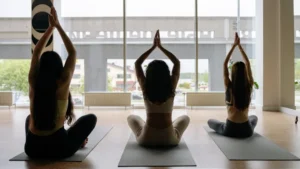
The traditional image of yoga—a practitioner seated in a silent studio on a rubber mat—is undergoing a significant transformation as the fitness industry moves toward more inclusive and accessible modalities. Recent developments in the wellness sector have highlighted a growing demand for "mat-free" practices that accommodate individuals who find floor-based exercises challenging or impractical. On May 12, 2026, wellness experts emphasized that the assumption that all students can easily transition between standing and floor positions is a barrier to entry for millions. By focusing on standing yoga sequences, instructors are now addressing a diverse demographic ranging from office workers and frequent travelers to those managing chronic joint pain or recovering from physical injuries.
The Shift Toward Accessible Yoga Practices
The evolution of yoga from a specialized discipline to a mainstream health tool has necessitated a rethink of its delivery. For many, the physical demand of lowering the body to a mat and then pushing back up to a standing position is not merely an inconvenience but a physiological hurdle. This is particularly true for the aging population, individuals with a high Body Mass Index (BMI), and those suffering from conditions such as osteoarthritis or vertigo.
Beyond physical limitations, the "practicality gap" has become a major driver for the popularity of standing yoga. In a fast-paced global economy, practitioners often find themselves in environments—such as airport terminals, hotel rooms, or corporate offices—where spreading out a yoga mat is socially or logistically impossible. The emergence of the five-minute standing sequence provides a solution that integrates movement into the "interstitial spaces" of the day, ensuring that physical activity is not a separate, high-effort event but a seamless part of a daily routine.
A Chronology of the Yoga Accessibility Movement
The transition toward standing and chair-based yoga did not happen overnight. It is the result of a decade-long shift in how the medical and fitness communities view "functional movement."
- 2015–2019: The Rise of Corporate Wellness. Companies began implementing "desk yoga" to combat the health risks associated with sedentary work. These were early iterations of standing stretches designed to be done in business attire.
- 2020–2022: The Home Fitness Boom. During global lockdowns, individuals began practicing in cramped living spaces, leading to an increased interest in exercises that required a minimal footprint.
- 2023–2025: Clinical Integration. Physical therapists began more frequently prescribing yoga-based standing stretches for rehabilitation, recognizing that standing poses build functional balance and bone density more effectively for certain populations than seated poses.
- 2026: The "Yoga Anywhere" Standard. The publication of comprehensive standing sequences marks a turning point where mat-free yoga is no longer seen as a "modification" for the weak, but as a primary, efficient method of practice for the general public.
Data and Physiological Impact of Standing Sequences
Supporting data from the Global Health and Fitness Association (GHFA) suggests that "micro-movements"—short bursts of activity lasting five to ten minutes—can reduce the negative impacts of prolonged sitting by up to 30%. Standing yoga specifically targets the "posterior chain" and core stabilizers, which are often deactivated during long periods of desk work.
Physiologically, standing poses offer unique benefits:
- Proprioception: Standing on one’s feet without the support of a mat requires the nervous system to constantly adjust, improving balance and spatial awareness.
- Bone Density: Weight-bearing exercises are essential for preventing osteoporosis. Standing yoga puts healthy stress on the femur and pelvis, encouraging bone remodeling.
- Circulatory Health: By moving the limbs through their full range of motion while standing, the body more effectively pumps blood back to the heart against gravity, reducing the risk of edema in the lower extremities.
The 5-Minute Standing Sequence: An Instructional Guide
The following eight-step sequence has been identified by practitioners as an optimal "anywhere" routine. It requires no equipment and can be performed in a space as small as a bathroom stall or an airplane galley.
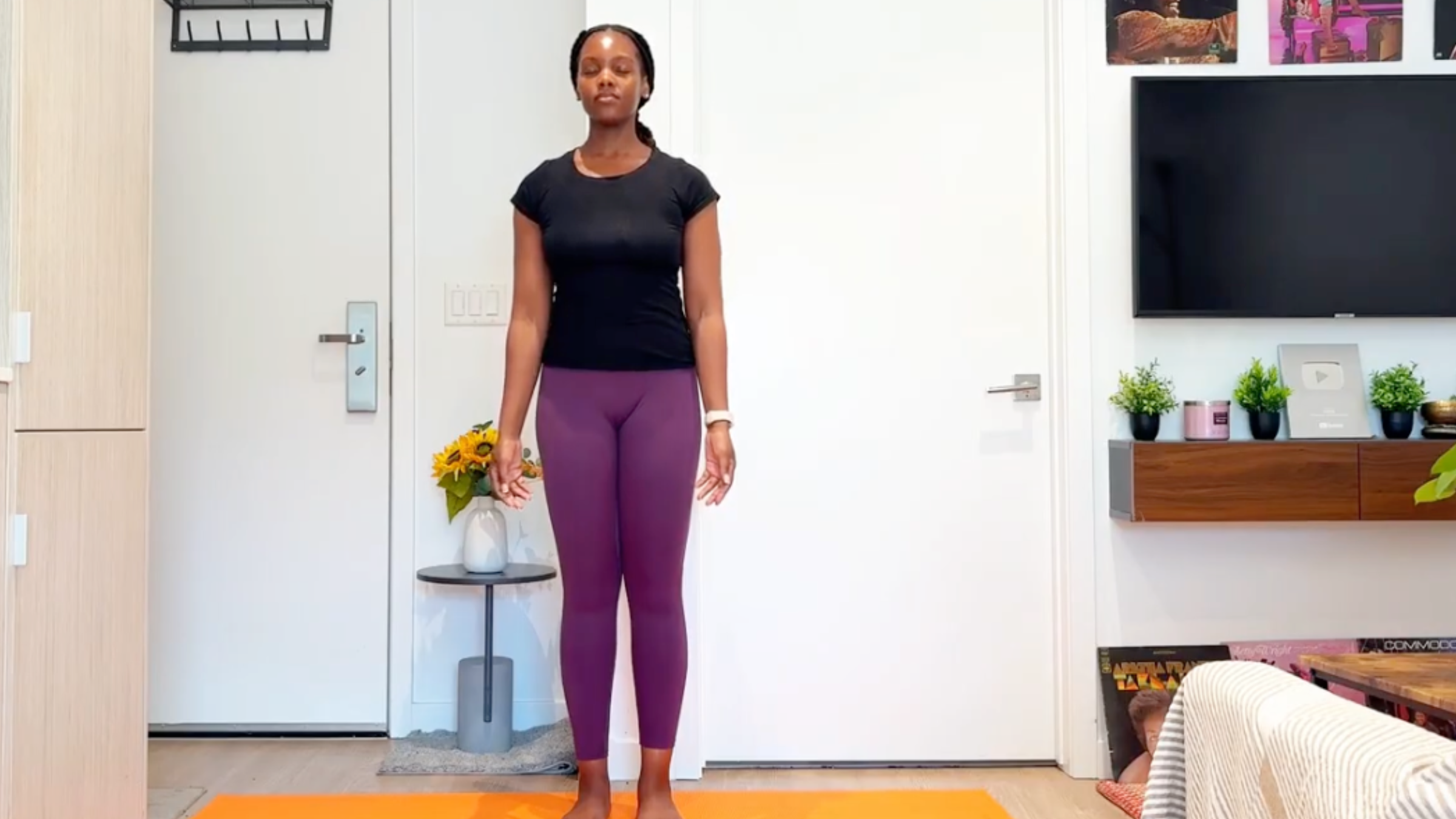
1. Mountain Pose (Tadasana)
The foundation of all standing poses, Mountain Pose, focuses on alignment. The practitioner stands with feet either together or hip-width apart, pressing firmly into the floor. The crown of the head reaches toward the ceiling, creating a neutral spine. This pose is critical for resetting posture and grounding the nervous system through slow, diaphragmatic breathing.
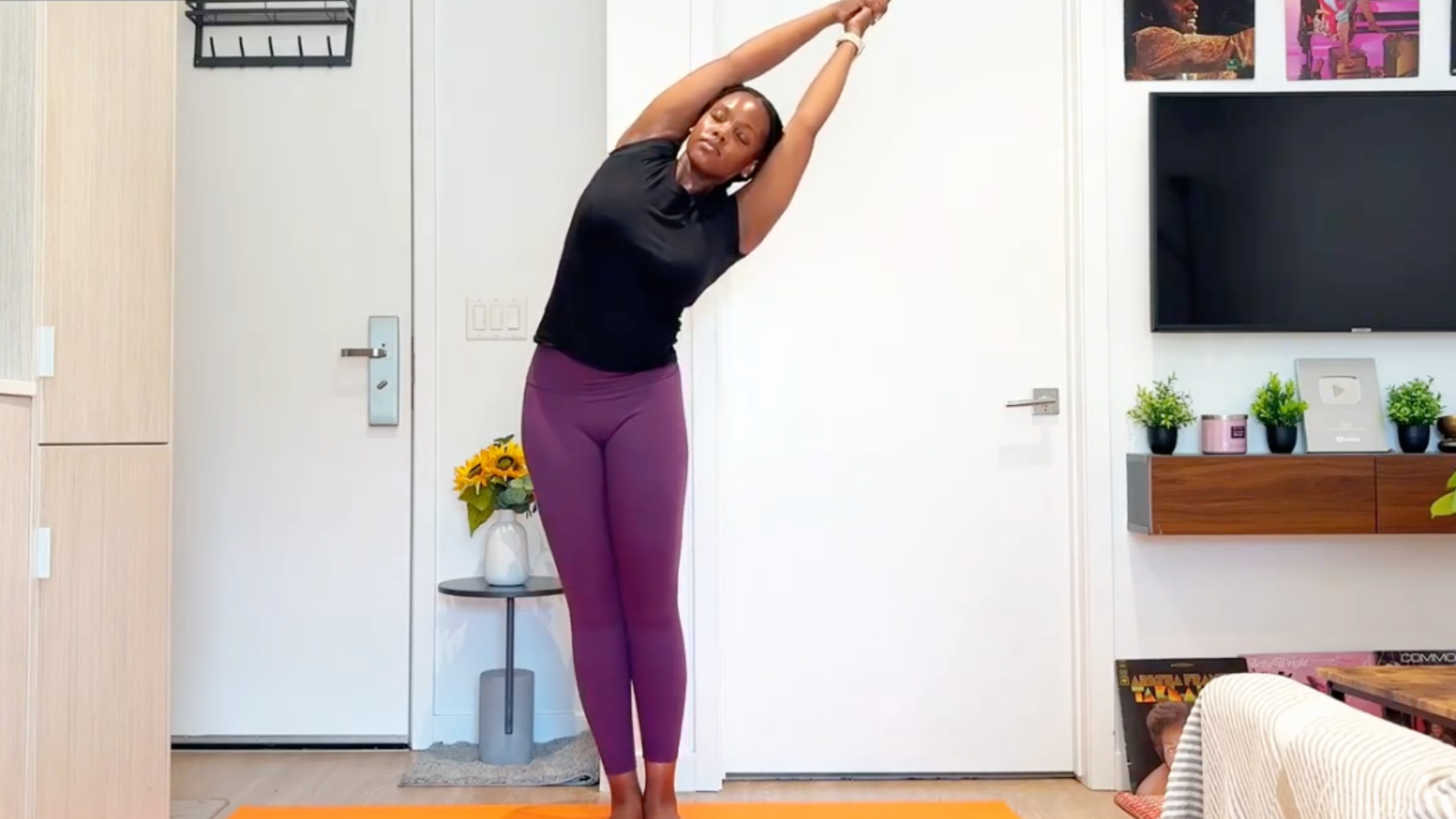
2. Standing Side Stretch (Parsva Hastasana)
This movement addresses the lateral muscles of the torso, which are rarely engaged in forward-moving activities like walking or driving. By sweeping the arms overhead, interlacing the fingers, and leaning to each side, the practitioner opens the intercostal muscles between the ribs. This expansion allows for deeper lung capacity and helps alleviate the "compressed" feeling that follows hours of sitting.
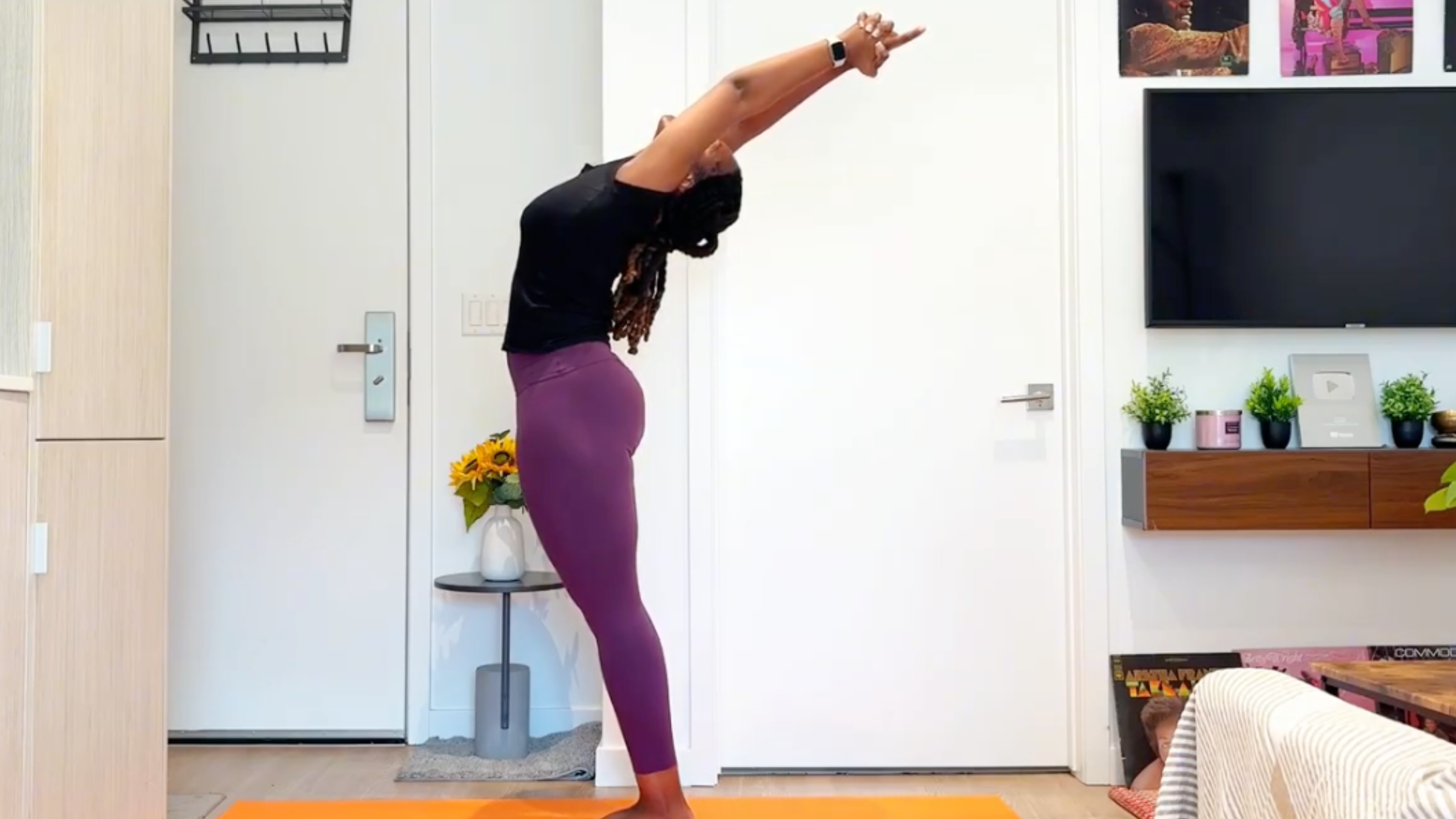
3. Standing Backbend (Anuvittasana)
To counteract "tech neck"—the forward-leaning posture caused by smartphone and computer use—the standing backbend is essential. With arms overhead, the practitioner lifts the gaze and arches the upper back. This opens the chest and stretches the hip flexors, which are often chronically tight in modern humans.
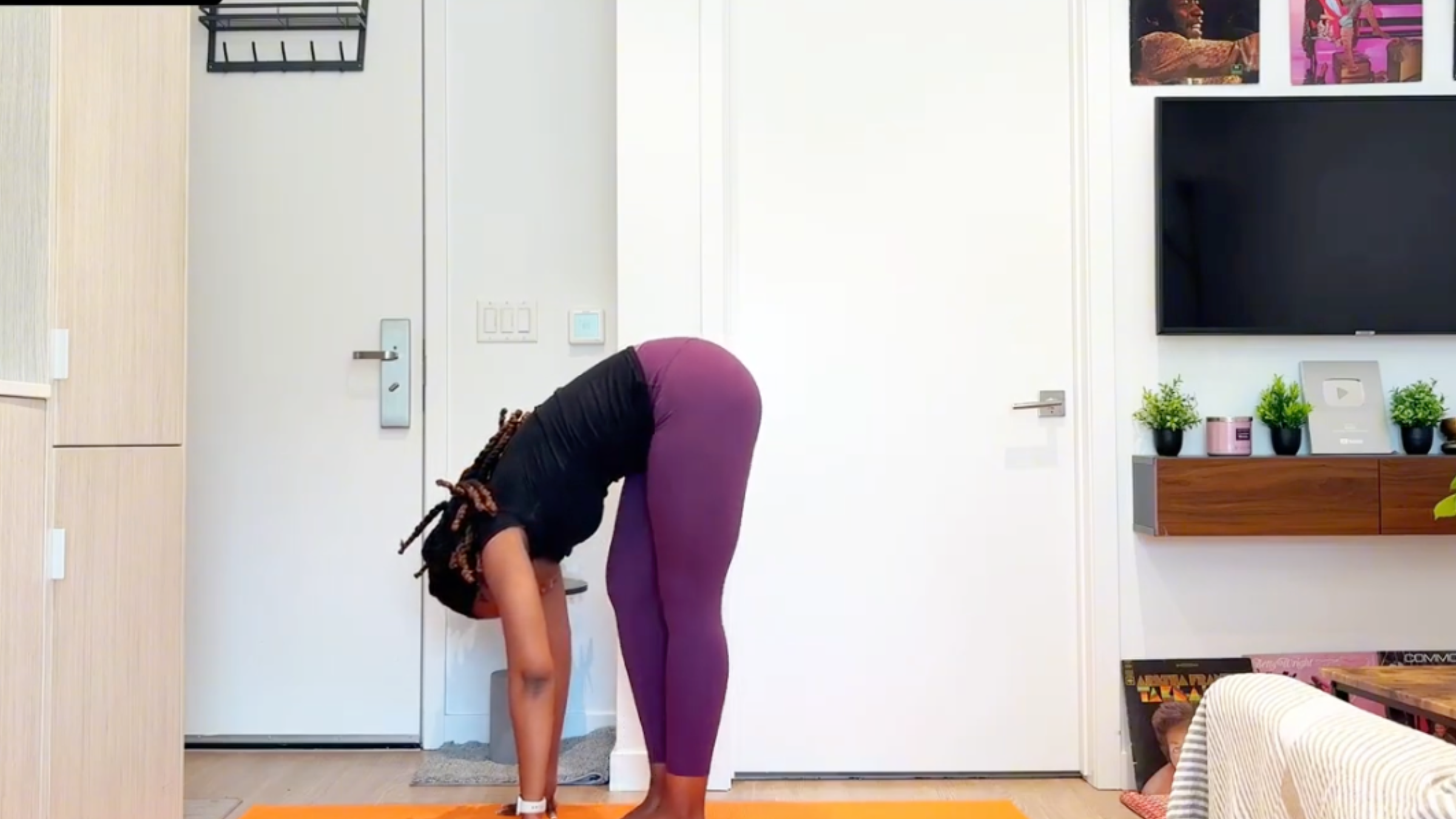
4. Standing Forward Fold (Uttanasana)
While many associate forward folds with touching the floor, the standing version can be modified by placing hands on a desk, a wall, or the shins. This pose provides a deep stretch to the hamstrings and releases tension in the lower back. By allowing the neck to hang heavy, practitioners can also reduce tension headaches caused by upper-body stiffness.
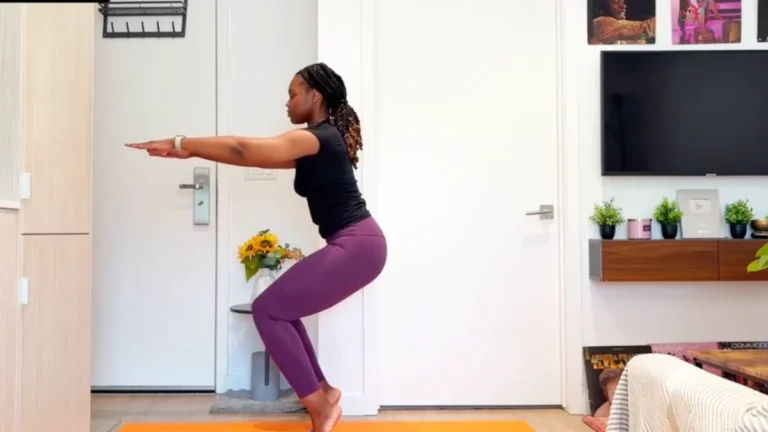
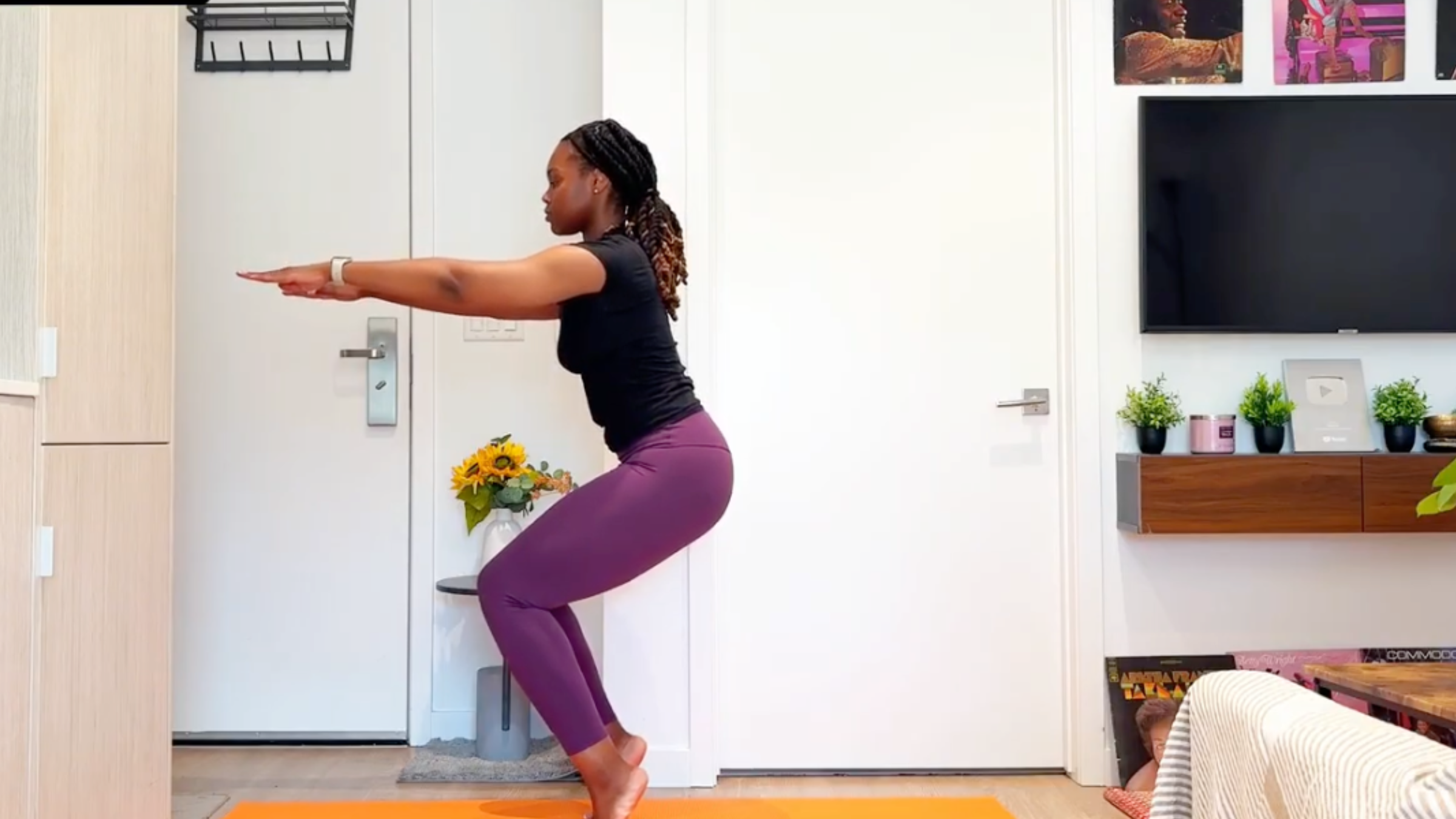
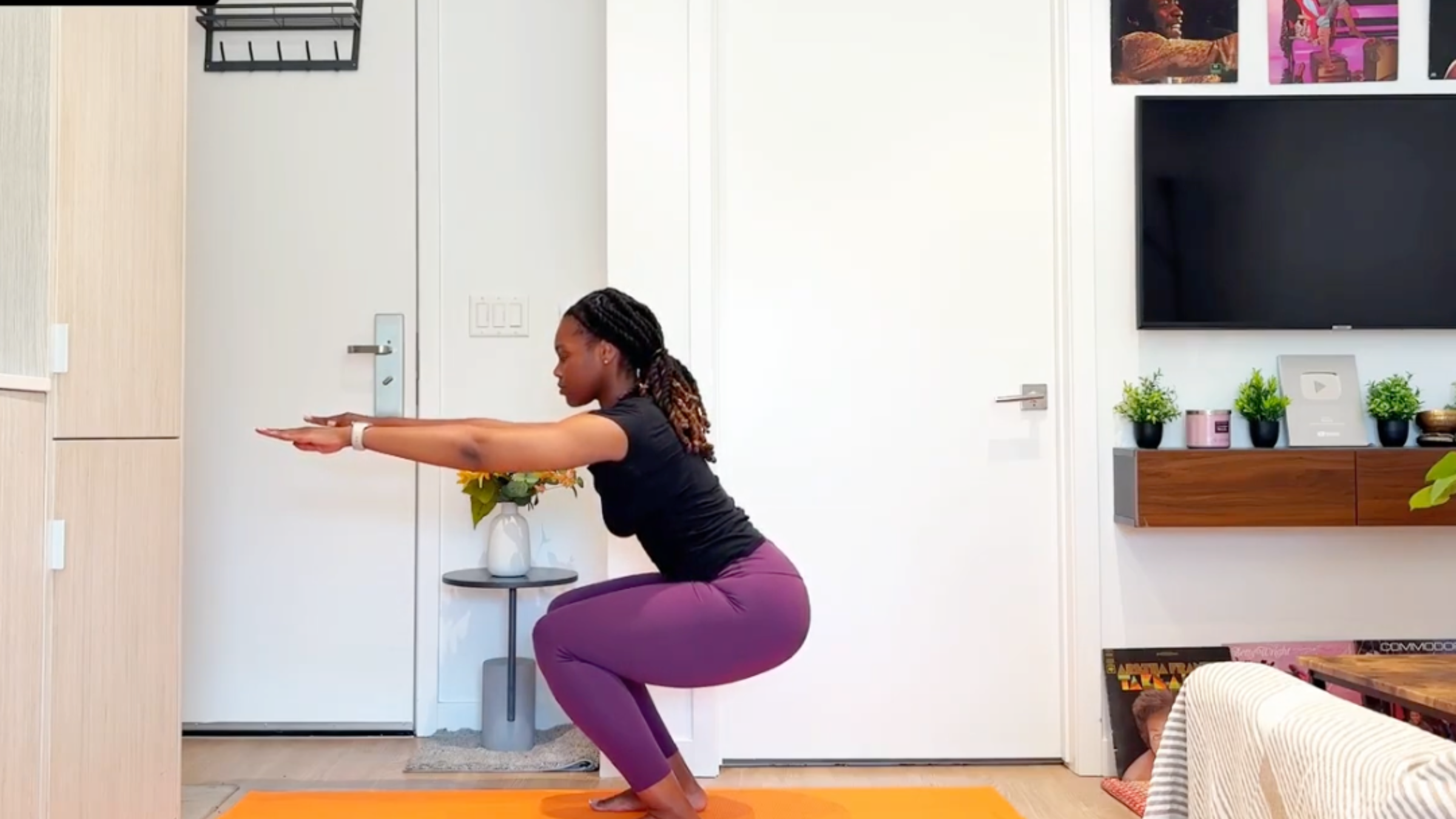
5. Chair Pose (Utkatasana)
Chair Pose is a functional power move. By bending the knees and sitting the hips back, the practitioner engages the glutes and quadriceps. This builds the leg strength necessary for daily activities like climbing stairs. A variation involving lifting the heels further challenges the calves and ankle stability, providing a metabolic boost in a short timeframe.
6. Dynamic Knee Bends
This portion of the sequence focuses on joint lubrication. By standing with feet wider than hip-width and alternately bending each knee, the practitioner encourages the flow of synovial fluid in the knee and hip joints. This lateral movement is vital for hip mobility and preventing the stiffness associated with aging.
7. Wide-Legged Forward Fold (Prasarita Padottanasana)
Widening the stance changes the stretch to the inner thighs (adductors) and provides a different angle of release for the spine. This pose is often used in a journalistic or professional context as a "reset" because it increases blood flow to the brain, potentially improving cognitive focus for the remainder of the workday.
8. Hip Circles and Closing
The sequence concludes with hip circles, which release the psoas and pelvic floor muscles. The final transition back to Mountain Pose with hands in a prayer position (anjali mudra) allows the practitioner to observe the immediate changes in their heart rate and mental state.
Expert Reactions and Industry Implications
Industry leaders have responded positively to the move toward mat-free yoga. Sarah Jenkins, a senior consultant for the International Association of Yoga Therapists, stated, "We are finally moving away from the ‘performative’ aspect of yoga—where it has to look a certain way on a mat—and moving toward a ‘functional’ application. This makes the therapeutic benefits of yoga available to someone in a suit, someone in a hospital gown, or someone at a bus stop."
Corporate HR departments are also taking note. Recent surveys indicate that employees are more likely to engage in "wellness breaks" if they do not have to change clothes or use specialized equipment. The 5-minute standing sequence is being integrated into digital wellness apps provided by major tech firms, suggesting a shift in how "fitness" is measured—moving from "minutes in the gym" to "frequency of movement throughout the day."
Broader Impact on Public Health
The implications of widespread standing yoga adoption extend to public health. As the global population ages, maintaining the ability to stand and move without assistance is a primary indicator of long-term health and independence. By normalizing "standing-only" practices, the wellness industry is lowering the barrier for the elderly and the injured to maintain their physical autonomy.
Furthermore, the environmental impact of the yoga industry—which produces millions of PVC-based mats annually—could be mitigated if a significant portion of the global community adopts mat-free practices. This aligns with broader 2026 sustainability goals within the fitness sector to reduce the carbon footprint of personal health routines.
In conclusion, the 5-minute standing yoga practice represents more than just a quick exercise routine; it is a symbol of a more inclusive, practical, and scientifically-backed approach to modern wellness. By removing the mat, the practice of yoga becomes truly universal, accessible to anyone with five minutes and the space to stand.