


Tonsillitis snoring and sleep apnea – Tonsillitis, snoring, and sleep apnea are often interconnected conditions that can significantly impact a person’s quality of life. Understanding the symptoms, causes, diagnosis, treatment, and preventative measures is crucial for managing these conditions effectively. This comprehensive guide explores the intricate relationship between these three issues.
This article will delve into the common symptoms, potential causes, diagnostic methods, and treatment options for each condition. We’ll also examine the overlap between these conditions and discuss strategies for prevention and management, culminating in a look at how they affect daily life. We will examine case studies and lifestyle changes to help illustrate the discussion.
Introduction to Tonsillitis, Snoring, and Sleep Apnea
Understanding the nuances of tonsillitis, snoring, and sleep apnea is crucial for recognizing their potential connections and symptoms. These conditions, while seemingly distinct, can sometimes overlap, leading to a complex interplay of health concerns. Identifying the symptoms and understanding the potential links is essential for seeking appropriate medical attention and management.
Defining the Conditions
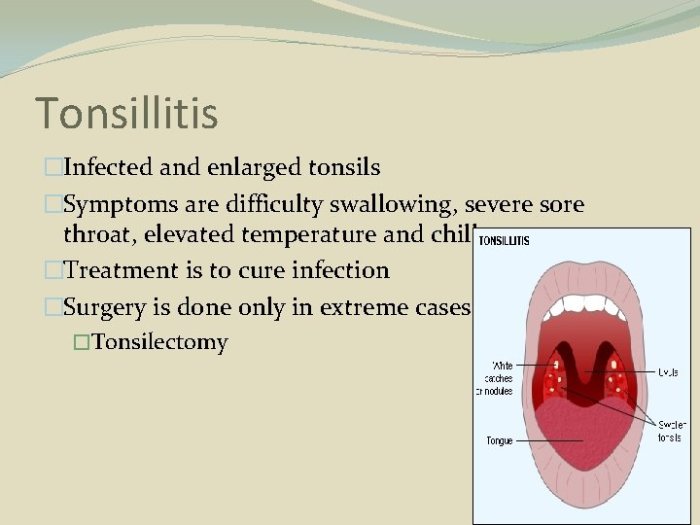
Tonsillitis is an inflammation of the tonsils, two oval-shaped pads of lymphatic tissue located at the back of the throat. Snoring is a common sound during sleep, often caused by the vibration of tissues in the throat and nose. Sleep apnea is a sleep disorder characterized by pauses in breathing during sleep. These pauses can last for a few seconds to several minutes, leading to reduced oxygen levels in the blood.
Common Symptoms
Tonsillitis is often accompanied by sore throat, difficulty swallowing, fever, and swollen lymph nodes. Snoring can range from a soft, gentle sound to a loud, disruptive one. Sleep apnea often presents with daytime fatigue, headaches, and difficulty concentrating, as well as loud snoring. It’s important to note that these are not exhaustive lists, and symptoms can vary significantly from person to person.
Potential Overlap and Connections
There’s a potential connection between tonsillitis, snoring, and sleep apnea, primarily stemming from the shared anatomical region of the throat and upper airway. Chronic tonsillitis can lead to inflammation and swelling in this area, potentially obstructing the airway during sleep, thereby contributing to snoring and even sleep apnea. Additionally, the enlarged tonsils in tonsillitis can exacerbate the narrowing of the airways, making it harder for air to pass, leading to more frequent or severe apneic episodes.
Comparative Symptoms Table
| Condition | Symptom 1 | Symptom 2 | Symptom 3 |
|---|---|---|---|
| Tonsillitis | Sore throat | Difficulty swallowing | Fever |
| Snoring | Loud breathing sounds during sleep | Disrupted sleep | Daytime fatigue |
| Sleep Apnea | Loud snoring | Pauses in breathing during sleep | Daytime sleepiness |
Causes and Risk Factors

Understanding the causes and risk factors associated with tonsillitis, snoring, and sleep apnea is crucial for prevention and management. These conditions often stem from a combination of genetic predispositions and lifestyle choices. This section delves into the specific factors that increase the likelihood of developing each condition.
Causes of Tonsillitis
Tonsillitis, the inflammation of the tonsils, is frequently caused by viral infections, such as those that cause the common cold or flu. Bacterial infections, particularly streptococcal bacteria (group A strep), can also lead to tonsillitis. These infections trigger an inflammatory response in the tonsils, causing them to swell and become sore. Other less common causes include environmental irritants, such as smoke or allergens.
Factors Contributing to Snoring
Snoring is a common sleep disorder characterized by the vibration of tissues in the throat during breathing. Several factors can contribute to snoring, ranging from structural issues to lifestyle habits. These factors often interact, compounding the likelihood of snoring. The narrowing of the airway, often due to the position of the soft palate or uvula, can result in vibrations during inhalation and exhalation.
Additionally, obesity can lead to increased tissue mass in the throat, further obstructing the airway. Alcohol consumption and certain medications can also relax the muscles in the throat, contributing to snoring.
Potential Risk Factors for Sleep Apnea
Sleep apnea is a potentially serious sleep disorder characterized by pauses in breathing during sleep. Several risk factors can increase a person’s susceptibility to sleep apnea. Obesity is a significant risk factor, as excess weight can lead to increased tissue mass in the neck and throat, obstructing the airway. A family history of sleep apnea can indicate a genetic predisposition.
Certain medical conditions, such as hypertension and diabetes, can also increase the risk of sleep apnea. Smoking can irritate the airway and contribute to the narrowing of the airways. Age is also a factor, as the risk of sleep apnea tends to increase with age.
Risk Factors Table
| Condition | Risk Factor 1 | Risk Factor 2 | Risk Factor 3 |
|---|---|---|---|
| Tonsillitis | Viral infections (e.g., common cold) | Bacterial infections (e.g., strep throat) | Environmental irritants (e.g., smoke) |
| Snoring | Obesity | Narrowed airway (e.g., large tonsils) | Alcohol consumption |
| Sleep Apnea | Obesity | Family history | Certain medical conditions (e.g., hypertension) |
Prevention and Management
Preventing tonsillitis, managing snoring, and mitigating sleep apnea all involve proactive lifestyle adjustments. Understanding the contributing factors, such as poor diet, lack of exercise, and environmental triggers, allows for targeted interventions. Implementing these strategies can significantly reduce the risk of developing or worsening these conditions.
Preventing Tonsillitis
Tonsillitis, often triggered by viral or bacterial infections, can be mitigated by bolstering the immune system. Maintaining good hygiene practices, such as frequent handwashing, are crucial in preventing the spread of infectious agents. A balanced diet rich in fruits, vegetables, and whole grains, combined with regular exercise, strengthens the immune system, making it more resilient to infection. Avoiding exposure to individuals with upper respiratory infections can also minimize the risk of transmission.
Managing Snoring, Tonsillitis snoring and sleep apnea
Snoring, often a symptom of obstructive sleep apnea or related to structural issues in the throat, can be managed through various strategies. Maintaining a healthy weight can alleviate pressure on the airways, reducing the likelihood of snoring episodes. Avoiding alcohol and certain medications that can relax the throat muscles before bedtime can also contribute to reduced snoring. Elevating the head of the bed can help improve airflow, and avoiding sleeping on the back can minimize the obstruction of the airway.
Managing Sleep Apnea
Sleep apnea, characterized by pauses in breathing during sleep, can be managed through a combination of lifestyle changes and, in some cases, medical interventions. Weight management plays a crucial role in reducing the pressure on the airways, as does avoiding alcohol and sedatives before bed. Regular exercise can improve overall cardiovascular health, enhancing the body’s ability to manage breathing during sleep.
For individuals diagnosed with sleep apnea, CPAP (continuous positive airway pressure) therapy is often recommended to maintain consistent airflow during sleep.
Lifestyle Changes for Reduced Risk
Adopting healthy habits across all areas of life can dramatically reduce the risk of tonsillitis, snoring, and sleep apnea. Consistent adherence to these practices is key to long-term well-being.
Ugh, tonsillitis, snoring, and sleep apnea – seriously, the worst! It’s exhausting, and can sometimes feel like a constant battle. It’s easy to get caught up in the physical symptoms, but have you ever considered if there might be other underlying issues at play? Sometimes, people dealing with these sleep problems might also be experiencing behaviors that resemble love bombing.
Learning about what is love bombing can be surprisingly helpful in understanding complex social dynamics and how these seemingly disparate issues can intertwine. What is love bombing can be a red flag in relationships, and it’s important to know the signs. In the end, understanding these potential connections can help us better address the underlying issues that could be contributing to the overall problem, including tonsillitis, snoring, and sleep apnea.
| Condition | Lifestyle Change 1 | Lifestyle Change 2 | Lifestyle Change 3 |
|---|---|---|---|
| Tonsillitis | Regular handwashing and hygiene | Balanced diet rich in fruits and vegetables | Regular exercise to boost immunity |
| Snoring | Maintaining a healthy weight | Avoiding alcohol and sedatives before bed | Elevating the head of the bed |
| Sleep Apnea | Weight management | Regular exercise | Avoiding alcohol and sedatives before bed |
Illustrative Cases: Tonsillitis Snoring And Sleep Apnea
Understanding the interplay between tonsillitis, snoring, and sleep apnea requires examining real-world examples. Case studies provide valuable insights into the diverse presentations of these conditions and the effectiveness of different treatment approaches. The following examples highlight common scenarios and outcomes.
Case Study: Tonsillitis, Snoring, and Sleep Apnea
This case study involves a 12-year-old male patient who presented with a history of recurrent tonsillitis, chronic snoring, and daytime sleepiness. Physical examination revealed enlarged tonsils and adenoids, a common finding in children with recurrent tonsillitis. He also exhibited signs of sleep-disordered breathing, such as noisy breathing and pauses in respiration during sleep. Polysomnography confirmed the diagnosis of obstructive sleep apnea (OSA), a condition characterized by pauses in breathing during sleep.
Tonsillitis, snoring, and sleep apnea can be a real pain, impacting your overall well-being. Sometimes, these issues are related to underlying health conditions, like certain types of vision problems. For example, if you’re experiencing difficulty distinguishing between colors, like red and green, a simple red green color blind test might help uncover a potential connection. Ultimately, understanding these potential links is key to diagnosing and treating tonsillitis, snoring, and sleep apnea effectively.
Treatment involved tonsillectomy and adenoidectomy to address the underlying structural issue. Post-surgery, the patient reported significant improvements in his sleep quality and daytime energy levels. His snoring significantly reduced, and his parents reported a noticeable improvement in his overall well-being.
Case Study: Tonsillitis and Snoring
A 7-year-old female presented with frequent episodes of tonsillitis and noticeable snoring. The snoring was disruptive to her sleep and that of her family. While the patient’s snoring wasn’t severe enough to indicate sleep apnea, the combination of frequent tonsillitis and snoring suggests a potential link between the two conditions. Treatment focused on managing the tonsillitis through antibiotics and regular follow-up visits.
Tonsillitis, snoring, and sleep apnea can be really disruptive, impacting your overall well-being. Interestingly, similar to the uncertainty surrounding how long after losing a mucus plug labor might begin, it’s often tricky to pinpoint exactly when these sleep-related issues will start to noticeably improve. For example, seeking guidance on timing can be helpful when considering potential solutions for your sleep apnea, which can be directly impacted by things like tonsillitis or snoring.
A great resource to understand timing related to childbirth is how long after losing mucus plug does labor start. Ultimately, a consistent sleep routine and proper medical attention can help manage these conditions effectively.
Additionally, a discussion with the family regarding strategies for improving sleep hygiene, such as a consistent sleep schedule and a quiet bedroom environment, was crucial. This approach proved effective in alleviating the snoring and improving the patient’s overall quality of sleep.
Case Study: Sleep Apnea and Snoring
A 45-year-old male presented with severe snoring and frequent episodes of daytime sleepiness. He also reported episodes of waking up gasping for air, a common symptom of sleep apnea. He was also found to have hypertension and elevated cholesterol levels. A comprehensive sleep study revealed a diagnosis of moderate to severe obstructive sleep apnea. Treatment involved lifestyle modifications, including weight loss, and the use of a continuous positive airway pressure (CPAP) machine.
The CPAP machine delivered a constant stream of air pressure to keep the airways open during sleep, effectively treating the sleep apnea. Following treatment, the patient experienced a significant reduction in snoring and daytime sleepiness, and his hypertension and cholesterol levels improved.
Treatment Outcomes Table
| Case # | Patient Details | Symptoms | Treatment Outcomes |
|---|---|---|---|
| 1 | 12-year-old male, recurrent tonsillitis, chronic snoring, daytime sleepiness | Enlarged tonsils and adenoids, noisy breathing, pauses in respiration during sleep | Tonsillectomy and adenoidectomy, significant improvement in sleep quality, reduced snoring, improved daytime energy levels. |
| 2 | 7-year-old female, frequent tonsillitis, noticeable snoring | Frequent tonsillitis, disruptive snoring | Management of tonsillitis (antibiotics), improved sleep hygiene, reduced snoring, improved sleep quality. |
| 3 | 45-year-old male, severe snoring, daytime sleepiness, episodes of waking up gasping for air, hypertension, elevated cholesterol | Severe snoring, daytime sleepiness, episodes of waking up gasping for air, hypertension, elevated cholesterol | Lifestyle modifications (weight loss), CPAP machine use, significant reduction in snoring, daytime sleepiness, improved hypertension and cholesterol levels. |
Impact on Quality of Life
The conditions of tonsillitis, snoring, and sleep apnea can significantly diminish the quality of life for those affected. These conditions often lead to a cascade of negative impacts, affecting not just physical health but also emotional well-being and social interactions. Understanding these impacts is crucial for developing effective management strategies and promoting overall health and wellness.These conditions are not merely inconveniences; they can have far-reaching consequences.
Chronic pain, fatigue, and reduced cognitive function are just some of the ways these conditions can disrupt daily life. The interplay between physical discomfort, sleep disturbances, and emotional responses creates a complex picture of how these conditions affect individuals.
Impact of Tonsillitis on Daily Life
Tonsillitis, characterized by inflamed tonsils, frequently results in sore throats, difficulty swallowing, and fever. These symptoms can severely limit daily activities, impacting school or work attendance. The discomfort and pain can lead to reduced productivity and overall fatigue, affecting concentration and academic or professional performance. For example, a student experiencing frequent tonsillitis may miss important classes and struggle to keep up with their studies.
Impact of Snoring on Sleep Quality and Relationships
Snoring, a common sleep disorder, disrupts both the snorer’s and their partner’s sleep. The loud, repetitive sounds can lead to fragmented sleep, reducing the quality and duration of restorative rest. This lack of quality sleep can result in daytime fatigue, impaired cognitive function, and reduced alertness. Furthermore, snoring can strain relationships, causing tension and conflict between partners.
For instance, a partner who is constantly disturbed by snoring may experience frustration and resentment.
Impact of Sleep Apnea on Overall Health and Well-being
Sleep apnea, a more serious sleep disorder, is characterized by pauses in breathing during sleep. These episodes can occur hundreds of times a night, leading to severe sleep deprivation and a range of health complications. The chronic lack of oxygen during sleep can have profound effects on cardiovascular health, increasing the risk of high blood pressure, heart disease, and stroke.
Moreover, sleep apnea is linked to an increased risk of type 2 diabetes and certain mental health issues like depression and anxiety. For example, a person with untreated sleep apnea might experience significant daytime sleepiness, leading to accidents and reduced work performance.
Comparison of Impact on Different Aspects of Life
| Condition | Impact on Sleep | Impact on Mood | Impact on Social Life |
|---|---|---|---|
| Tonsillitis | Discomfort and pain can interfere with sleep, resulting in fragmented sleep and fatigue. | Pain and discomfort can lead to irritability, frustration, and general feelings of unwellness. | Difficulty attending social events or school/work due to pain and discomfort. |
| Snoring | Fragmented sleep for both the snorer and their partner, leading to reduced sleep quality and daytime fatigue. | Irritability, frustration, and tension may arise in the relationship due to disrupted sleep. | Strained relationships and potential conflict due to disrupted sleep for both parties. |
| Sleep Apnea | Severe sleep deprivation due to frequent pauses in breathing, resulting in significant daytime sleepiness and impaired cognitive function. | Increased risk of depression, anxiety, and mood swings due to chronic sleep deprivation and oxygen deprivation. | Difficulty maintaining relationships due to mood swings, irritability, and reduced energy. Potential absenteeism from social events and activities. |
Final Review
In conclusion, tonsillitis, snoring, and sleep apnea, while distinct conditions, can frequently overlap and affect each other. Addressing the symptoms, understanding the causes, and utilizing appropriate treatments are key steps in improving overall well-being. Lifestyle adjustments and a proactive approach to diagnosis and management are essential for better quality of life. We’ve explored the significant impact these conditions can have on daily life, providing a roadmap for effectively managing them.