


Chest x rays for lung cancer diagnosis – Chest x-rays for lung cancer diagnosis are a crucial initial step in detecting this serious disease. They provide a quick and relatively inexpensive way to identify potential issues, although their limitations must be acknowledged. Understanding the basics, their role in comparison to other imaging techniques, and the interpretation process are vital to grasping the full picture. This exploration will delve into the various aspects of chest x-rays in lung cancer diagnosis, from their role in early detection to the limitations and potential pitfalls.
Chest x-rays, while not always definitive, offer a valuable initial screening tool. The process involves looking for specific patterns and anomalies, such as masses or nodules, which might indicate the presence of lung cancer. However, the accuracy and reliability of chest x-rays in lung cancer diagnosis vary, making further investigations necessary in many cases. This overview aims to clarify the practical application of this imaging method.
Introduction to Chest X-rays for Lung Cancer Diagnosis

Chest X-rays remain a valuable, initial diagnostic tool in assessing potential lung cancer. While not definitive, they can help identify suspicious areas and guide further investigations. This approach is particularly important in the early stages of lung cancer detection, when timely intervention can significantly improve patient outcomes.Chest X-rays utilize the principle of differential absorption of X-rays by different tissues in the body.
Air, for instance, appears dark on the X-ray, while denser tissues like bone and tumors appear lighter. This contrast allows radiologists to visualize the structures of the lungs, heart, and surrounding tissues. The presence of abnormalities, such as masses or nodules, can then be evaluated for potential malignancy.
Limitations of Chest X-rays in Lung Cancer Diagnosis
Chest X-rays have inherent limitations in detecting lung cancer. Their sensitivity, meaning the ability to identify the presence of the disease, is relatively low. Small, early-stage tumors, often critical for early intervention, might not be visible on a standard chest X-ray. Furthermore, other conditions can mimic the appearance of lung cancer, leading to false positives. The lack of specificity, the ability to distinguish between different conditions, is another significant limitation.
This necessitates further investigation with more sensitive imaging techniques like CT scans and biopsies.
Typical X-ray Findings Suggestive of Lung Cancer
Several X-ray findings can suggest the possibility of lung cancer. These include the presence of a mass or nodule in the lung. A mass is a solid, distinct opacity, whereas a nodule is a small, rounded opacity. These abnormalities may appear as a localized area of increased density, sometimes with irregular borders. Additionally, changes in the lung tissue’s architecture, such as atelectasis (collapse of a lung segment) or pleural effusion (fluid buildup around the lung), can be associated with lung cancer, although these aren’t always directly indicative of the disease.
Furthermore, a combination of these findings, alongside patient history and symptoms, may increase the suspicion for lung cancer.
Chest X-ray Views Used in Lung Cancer Diagnosis
The standard chest X-ray views used to assess lung cancer are crucial for providing a comprehensive view of the lungs. A clear understanding of these views allows radiologists to locate any potential abnormalities effectively.
| View | Description |
|---|---|
| Posteroanterior (PA) | The patient stands facing the X-ray machine, with the X-ray film placed behind them. This view provides a frontal view of the chest, essential for initial screening and identifying abnormalities in the anterior-posterior plane. |
| Lateral | The patient lies on their side, with the X-ray film placed on the opposite side. This view is crucial for assessing the structures in the depth of the chest and identifying abnormalities that might be obscured in the PA view. |
| Oblique | The patient is positioned at an angle to the X-ray machine. This view provides a more detailed view of specific lung segments, often used to assess areas of suspected disease. |
Comparison with Other Imaging Techniques
Chest X-rays, while valuable, are not the only tools in the arsenal for lung cancer detection. Understanding their limitations and comparing them to other imaging modalities is crucial for accurate diagnosis and appropriate treatment planning. This comparison will highlight the strengths and weaknesses of each method, aiding in the selection of the most suitable imaging technique for a given patient.The initial screening for lung cancer often involves a chest X-ray due to its affordability and accessibility.
However, for more detailed evaluations and precise staging, more advanced imaging techniques like CT scans and PET scans are frequently employed. The choice between these methods hinges on the specific clinical needs and the potential benefits each technique offers.
Comparison of Imaging Techniques
Chest X-rays offer a basic view of the lungs, revealing large abnormalities or opacities. However, their resolution is relatively low, making it difficult to detect smaller lesions or subtle changes that might indicate early-stage lung cancer. CT scans, on the other hand, provide detailed cross-sectional images of the lungs, enabling the detection of smaller nodules and characterizing their characteristics.
PET scans, utilizing radioactive tracers, highlight areas of increased metabolic activity, which can be associated with cancerous tumors. This information is useful in staging and assessing the extent of the disease.
Advantages and Disadvantages of Chest X-rays
Chest X-rays are advantageous due to their low cost, widespread availability, and minimal radiation exposure compared to other advanced imaging techniques. This makes them suitable for initial screening and follow-up assessments in cases where a more comprehensive imaging study is not immediately warranted.However, chest X-rays have limitations in detecting subtle lung abnormalities. Small nodules, which are crucial indicators in early-stage lung cancer detection, might be missed.
The lack of detailed three-dimensional imaging also hinders precise staging and characterization of the suspected lesion. Furthermore, differentiating benign from malignant lesions on a chest X-ray can be challenging, potentially leading to false-positive or false-negative results.
Sensitivity and Specificity Comparison
| Imaging Technique | Sensitivity | Specificity | Comments |
|---|---|---|---|
| Chest X-ray | Lower | Lower | Effective for detecting large abnormalities but less sensitive for small lesions. |
| CT Scan | Higher | Higher | Excellent for detecting small nodules and characterizing lesions, but higher radiation exposure. |
| PET Scan | High | High | Excellent for metabolic activity assessment, aiding in staging, but more expensive and requires specialized expertise. |
This table illustrates the comparative sensitivity and specificity of chest X-rays and other imaging modalities for lung cancer detection. Sensitivity refers to the ability to correctly identify patients with lung cancer, while specificity indicates the ability to correctly identify patients without lung cancer. CT scans and PET scans generally exhibit higher sensitivity and specificity compared to chest X-rays, especially for early-stage detection.
Role in Initial Screening
Chest X-rays play a vital role in the initial screening process for lung cancer. Their affordability and accessibility make them an important first step in identifying potential lung abnormalities that warrant further investigation with more advanced imaging techniques. In cases where a patient has risk factors for lung cancer, such as a history of smoking, a chest X-ray can be utilized to screen for potential abnormalities.
Circumstances Favoring Chest X-rays
Chest X-rays might be preferred over other imaging techniques in certain circumstances. For instance, when the initial assessment is needed to rule out serious lung abnormalities, a chest X-ray can be sufficient. Additionally, if the patient has contraindications for more complex imaging studies or has limited access to more sophisticated technology, a chest X-ray can serve as a valuable initial diagnostic tool.
For instance, a patient with a significant history of radiation exposure might be better suited for a chest X-ray as the initial screening modality.
Interpretation and Reporting of Chest X-rays
Deciphering chest X-rays for lung cancer involves a meticulous process of visual analysis and pattern recognition. Radiologists are trained to identify subtle abnormalities that might indicate the presence of lung cancer, using a combination of their knowledge of anatomical structures and experience with various pathological findings. This process is crucial for timely diagnosis and appropriate treatment planning.Radiologists meticulously examine the X-ray images for any deviations from the normal appearance of the lungs and surrounding structures.
They look for specific characteristics, such as the presence of masses, nodules, or other signs of lung pathology. Careful attention is paid to the size, shape, and location of these abnormalities, along with any associated features, such as calcification or cavitation. The radiologist’s interpretation considers the patient’s medical history, symptoms, and other imaging results.
Radiologist’s Assessment Process
Radiologists employ a structured approach to assess chest X-rays for potential lung cancer signs. They begin by evaluating the overall appearance of the lungs, noting any opacities, infiltrates, or other abnormalities. Subsequently, they focus on specific regions of the lungs, paying close attention to any unusual structures or patterns. This process often involves comparing the current X-ray to previous imaging studies to detect any changes over time.
Common Findings Suggestive of Lung Cancer
Recognizing specific patterns and abnormalities on chest X-rays can aid in identifying potential lung cancer. While chest X-rays are not always definitive for lung cancer, they can reveal clues.
Chest X-rays are a common initial diagnostic tool for lung cancer, but they aren’t always definitive. While these X-rays can sometimes detect abnormalities, further investigations are often needed. Understanding the various types of intellectual disability in children and adults, for example, can be a crucial part of a holistic approach to health. A deeper look at the potential underlying causes and contributing factors, as highlighted in this resource about types of intellectual disability in children and adults , might ultimately aid in the comprehensive evaluation of patients suspected of having lung cancer.
Ultimately, a nuanced understanding of the patient’s full medical history and a variety of diagnostic tools are essential for accurate lung cancer diagnosis.
| Finding | Description | Potential Lung Cancer Indication |
|---|---|---|
| Mass | A discrete, well-defined opacity. | May indicate a tumor, though not always cancerous. Size, shape, and margins are crucial for further evaluation. |
| Nodule | A small, rounded opacity, often less than 3cm in diameter. | Can be benign or malignant. A significant change in size or appearance over time warrants further investigation. Location is also important. |
| Atelectasis | Collapse of a portion of the lung. | Can sometimes be associated with tumors obstructing airways. |
| Pleural effusion | Fluid buildup in the pleural space surrounding the lungs. | Could be associated with lung cancer or other conditions, but its presence should prompt further investigation. |
| Infiltrates | Patches of abnormal density in the lung tissue. | May be indicative of various conditions, including infections or tumors. The appearance and distribution of the infiltrates can suggest possible lung cancer. |
Reporting Format
Chest X-ray reports related to lung cancer follow a standardized format. The report typically includes a description of the findings, a comparison to previous imaging studies (if available), and a summary of the findings. Radiologists quantify findings whenever possible, such as size, shape, and location of any abnormalities. Critical features, like a possible mass or nodule, are clearly noted.
The report also includes a conclusion about the significance of the findings in the context of the patient’s medical history. This format enables clinicians to make informed decisions about further diagnostic procedures.
Importance of Radiographic Technique
Optimal radiographic technique is crucial for obtaining diagnostic-quality chest X-rays. Proper positioning, exposure, and collimation are essential for accurate visualization of the lung fields and surrounding structures. Suboptimal technique can obscure subtle abnormalities or lead to artifacts, potentially hindering a correct diagnosis. A high-quality image is fundamental to the radiologist’s ability to provide a thorough and reliable interpretation.
Role in Early Detection and Staging: Chest X Rays For Lung Cancer Diagnosis
Chest X-rays play a crucial role in the initial evaluation of suspected lung cancer, particularly in identifying potential abnormalities and guiding further diagnostic investigations. While not as sensitive as more advanced imaging techniques, X-rays are often the first-line imaging modality due to their accessibility, affordability, and speed. This initial assessment helps clinicians to determine if further investigation is warranted and guides the subsequent diagnostic pathway.
Role in Early Detection
Chest X-rays are not always effective in detecting early-stage lung cancer. Their sensitivity is often limited, especially in the presence of small or subtle lesions. However, the presence of certain characteristic findings on a chest X-ray, such as a nodule or an opacity, can raise suspicion for malignancy and prompt further investigation with more advanced imaging techniques. For example, a patient presenting with persistent cough, weight loss, and a new opacity on a chest X-ray would warrant a CT scan for a more definitive diagnosis.
Chest X-rays are a common first step in diagnosing lung cancer, but they’re not always definitive. Knowing what questions to ask your doctor about potential next steps is crucial, like those covered in surgery questions you should ask. Ultimately, a thorough understanding of the testing process and potential procedures, alongside the right questions, can empower you to make informed decisions about your health journey concerning chest X-rays and lung cancer diagnosis.
This process allows for a prompt and efficient evaluation of the suspicion.
Role in Staging, Chest x rays for lung cancer diagnosis
Chest X-rays, though not as precise as advanced imaging like CT scans, can offer preliminary information about the extent of the disease. In early-stage disease, subtle abnormalities may be observed. As the disease progresses, more definitive signs may be apparent, such as pleural effusions, atelectasis, or mediastinal widening. This information can be used to differentiate between early-stage and advanced disease, and helps in the initial staging process.
The information gained from the X-ray is then used in conjunction with clinical information and further imaging results to determine the appropriate treatment strategy.
Comparison of Accuracy in Different Stages
| Stage of Lung Cancer | Accuracy of Chest X-ray | Explanation |
|---|---|---|
| Early Stage (Localized) | Moderate | May reveal subtle abnormalities, but not always definitive. |
| Intermediate Stage (Regional) | Limited | May show signs of spread to regional lymph nodes, but CT is often more accurate. |
| Advanced Stage (Distant) | Low | Less reliable in detecting distant metastases; CT scans are more appropriate for assessing advanced disease. |
The table illustrates the relative accuracy of chest X-rays in different stages of lung cancer. It highlights that chest X-rays are most useful in the initial screening phase, while more advanced imaging techniques are essential for precise staging in later stages.
Challenges in Early Detection for Specific Patient Populations
Certain patient populations may pose challenges for early detection using chest X-rays. Individuals with pre-existing lung conditions, such as chronic obstructive pulmonary disease (COPD), may have overlapping findings that mask the presence of early-stage lung cancer. Similarly, patients with dense lung tissue or those who have undergone previous chest procedures may experience challenges in interpreting the results. Furthermore, factors like age and smoking history need to be considered when assessing the results of the X-ray.
Chest X-rays are a common initial screening tool for lung cancer, but they aren’t always definitive. Sometimes, more advanced tests are needed to confirm a diagnosis. Understanding the nuances of different antidepressant treatments, like the similarities and differences between Wellbutrin and Zoloft, can be quite insightful , and that kind of careful consideration is also important in medical diagnostics.
Ultimately, the best approach to diagnosing lung cancer hinges on a comprehensive evaluation, including detailed medical history and potentially further imaging, like CT scans.
Correlation with Clinical Presentation
The clinical presentation of a patient plays a crucial role in interpreting the findings of a chest X-ray. For instance, a patient with a history of smoking, persistent cough, and weight loss, accompanied by an opacity on the X-ray, strongly suggests the possibility of lung cancer. Careful consideration of the patient’s medical history and symptoms helps to contextualize the X-ray findings and guide further investigations.
Conversely, an incidental finding on a chest X-ray without any correlating symptoms should be evaluated with caution.
Clinical Correlation and Further Investigations
Chest X-rays, while valuable, are just one piece of the puzzle in diagnosing lung cancer. A thorough understanding of the patient’s medical history, symptoms, and physical examination is crucial for interpreting the X-ray findings accurately. This clinical correlation is often the key to distinguishing between benign and malignant conditions.Clinical information significantly impacts the interpretation of a chest X-ray.
For instance, a patient with a history of smoking and persistent cough, accompanied by an abnormal chest X-ray showing a suspicious opacity, strongly suggests lung cancer. Conversely, a similar opacity in a non-smoker with no respiratory symptoms might indicate a different etiology. The radiologist’s interpretation is always informed by the clinician’s knowledge of the patient’s case.
Importance of Clinical Correlation
Clinical correlation ensures the X-ray findings are not misinterpreted. A seemingly insignificant finding on a chest X-ray can take on new meaning when considered alongside the patient’s medical history and symptoms. This critical process avoids misdiagnosis and directs the diagnostic pathway appropriately.
Clinical Information Used in Interpretation
Clinicians use various pieces of clinical information to contextualize the chest X-ray findings. These include:
- Patient history (smoking status, occupational exposure, prior respiratory illnesses, family history of lung cancer).
- Symptoms (cough, shortness of breath, hemoptysis, chest pain).
- Physical examination findings (vital signs, auscultation, presence of lymphadenopathy).
- Results of other investigations (blood tests, previous imaging studies).
Need for Further Investigations
A suggestive chest X-ray often necessitates further investigations to confirm the diagnosis and determine the extent of the disease. This is crucial for appropriate treatment planning. The decision for further investigations depends on the severity of the abnormality and the patient’s clinical presentation.
Common Follow-up Investigations
The choice of further investigation depends on the specific findings on the chest X-ray and the clinical context. Here’s a summary of common follow-up investigations:
| Finding on Chest X-ray | Possible Follow-up Investigations |
|---|---|
| Suspected mass or opacity | Computed Tomography (CT) scan of the chest, Bronchoscopy, Biopsy |
| Suspected pleural effusion | Thoracentesis (fluid aspiration and analysis), CT scan |
| Suspected mediastinal lymphadenopathy | CT scan of the chest, mediastinal biopsy |
| Infiltrative shadowing | CT scan of the chest, PET scan, Biopsy |
Workflow for Coordinating Investigations
A well-defined workflow ensures efficient and coordinated care for patients suspected of having lung cancer. This involves:
- Communication between the radiologist, clinician, and patient.
- Prompt ordering and scheduling of further investigations.
- Clear communication of findings and next steps.
- Patient education about the process and their role in the investigation.
Limitations and Potential Pitfalls
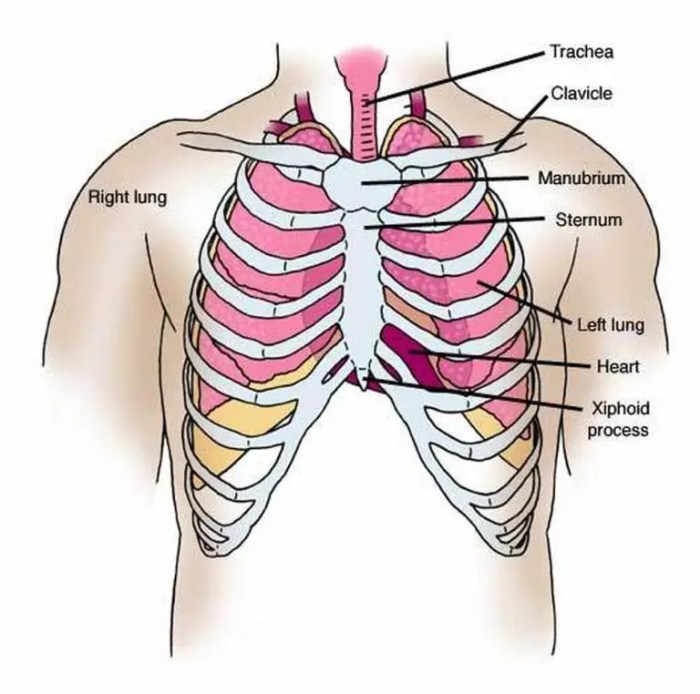
Chest X-rays, while a valuable tool in lung cancer diagnosis, are not without limitations. Their inherent limitations can lead to misinterpretations and missed diagnoses, particularly in cases where subtle or atypical findings are present. Understanding these limitations is crucial for radiologists and clinicians to avoid potential pitfalls and ensure appropriate follow-up investigations.
Limitations of Chest X-rays in Lung Cancer Diagnosis
Chest X-rays are relatively inexpensive and readily available, but their resolution is limited compared to more advanced imaging techniques. This can obscure subtle abnormalities, such as early-stage lung nodules or small pleural effusions, which might be indicative of lung cancer. Furthermore, chest X-rays primarily provide a two-dimensional representation of a three-dimensional structure, which can make it challenging to accurately assess the size, shape, and extent of suspicious lesions.
In some instances, the overlapping structures within the chest cavity can also obscure subtle abnormalities.
Cases Where Chest X-rays May Not Be Sufficient
Chest X-rays are often insufficient for definitive diagnosis in cases of suspected lung cancer. Small, peripheral lung nodules, for example, may be difficult to visualize or characterize on a chest X-ray. Likewise, subtle pleural thickening or calcifications might not be evident, making a precise diagnosis difficult. Moreover, subtle infiltrative processes, which can be indicative of lung cancer, may not be detectable in the early stages on a chest X-ray.
Similarly, subtle changes associated with metastases might be missed.
Misinterpretation of Chest X-rays
The interpretation of chest X-rays can be influenced by various factors. For instance, radiologists might misinterpret benign findings as malignant, particularly in patients with a strong smoking history or other risk factors. Conversely, subtle malignant features might be overlooked, potentially leading to delayed diagnosis. Radiographic findings need to be critically evaluated in conjunction with the patient’s clinical history and other risk factors.
Additionally, variations in image quality and technique can affect the accuracy of interpretation.
Pitfalls in Interpreting Chest X-rays in Different Patient Populations
Different patient populations may present unique challenges in interpreting chest X-rays. In smokers, the presence of chronic obstructive pulmonary disease (COPD) or emphysema can obscure or mimic subtle lung cancer features, making it more difficult to identify malignant lesions. In non-smokers, the absence of a strong risk factor might lead to a less stringent evaluation of suspicious findings, potentially resulting in a delayed diagnosis.
Moreover, the presence of underlying lung diseases can make it challenging to distinguish between these conditions and lung cancer.
Importance of Patient History and Risk Factors
Thorough patient history, including smoking history, occupational exposure, family history of lung cancer, and prior lung diseases, is essential when evaluating chest X-rays. This information helps radiologists and clinicians contextualize the findings and identify potential red flags. For example, a 65-year-old smoker with a persistent cough and weight loss who presents with a suspicious opacity on a chest X-ray warrants further investigation, whereas a similar finding in a young, non-smoking individual might not raise the same level of concern.
Clinical correlation is paramount for appropriate diagnostic interpretation.
Technological Advancements
The field of medical imaging is constantly evolving, and chest X-rays are no exception. Recent advancements have significantly impacted the accuracy and efficiency of lung cancer diagnosis, moving beyond the limitations of traditional film-based systems. These improvements allow for quicker and more precise identification of subtle abnormalities, ultimately benefiting patients.
Recent Advancements in Chest X-Ray Technology
Technological advancements have led to significant improvements in chest X-ray imaging. Digital imaging has replaced film, offering superior image quality and storage. Modern systems are equipped with advanced detectors and processing capabilities, enabling clearer visualization of subtle anatomical structures. This evolution has directly affected the quality and speed of lung cancer detection.
Impact on Lung Cancer Diagnosis Accuracy
Digital chest X-rays, coupled with sophisticated image analysis software, enhance the accuracy of lung cancer detection. The increased clarity allows radiologists to spot minute abnormalities that might be missed on traditional film images. This heightened precision directly improves diagnostic accuracy, leading to earlier intervention and potentially better treatment outcomes.
Examples of New Imaging Techniques
Several new imaging techniques are enhancing the detection of lung cancer. One example is the use of low-dose X-ray imaging, which reduces radiation exposure while maintaining high-quality images. Another advancement is the implementation of computer-aided detection (CAD) systems. These systems can help radiologists identify potential abnormalities, increasing the efficiency and sensitivity of the diagnostic process. High-resolution chest X-rays with specialized filters can also improve detection by highlighting subtle details.
Digital Imaging’s Role in Interpretation
Digital imaging has revolutionized chest X-ray interpretation. The ability to manipulate and enhance images digitally allows radiologists to view details that were previously obscured. Digital archives allow for easy access and comparison of images over time, aiding in the identification of subtle changes that might indicate disease progression. This improved visualization and accessibility significantly contribute to a more precise interpretation.
Evolution of Chest X-Ray Technology
The evolution of chest X-ray technology has been significant, impacting both the accuracy and efficiency of diagnosis. The transition from film-based to digital imaging, coupled with the introduction of advanced detectors and processing capabilities, has transformed the field.
| Era | Technology | Impact on Diagnosis |
|---|---|---|
| Pre-1990s | Film-based X-rays | Lower image quality, limited manipulation, and storage challenges. |
| 1990s-2000s | Digital X-rays | Improved image quality, enhanced storage and manipulation capabilities, reduced radiation exposure. |
| 2010s-Present | Advanced digital X-rays with CAD and low-dose techniques | Increased diagnostic accuracy, higher efficiency, improved visualization of subtle abnormalities, reduced radiation exposure, and improved accessibility. |
Closure
In summary, chest x-rays remain a valuable tool in the initial assessment of suspected lung cancer. While not a definitive diagnostic method, their role in early detection and subsequent investigations cannot be understated. Their limitations, however, should always be considered. The insights gained from this exploration underscore the importance of a comprehensive approach involving clinical correlation, further imaging, and expert interpretation to ensure accurate diagnosis and effective patient management.